
Most charity golf tournaments are planned from the first tee forward. The committee spends months putting players into teams, selling sponsorship opps on every hole, and finding a donor for the exclusive hole-in-one prize. The dinner hosted afterwards gets whatever planning time is left over, which usually means a buffet, a trophy table, and a microphone that someone tests ten minutes before guests sit down.
That’s a shame, because the room after the 18th hole is often the most generous room of the entire day. I’ve auctioneered for more than 100 nonprofits since 2017 and helped them raise over $22 million, and the golf events that raise the most are the ones that plan the dinner, with a live auction at the heart of it, as carefully as they plan the day on the course.
So if you’re working out how to plan a golf tournament fundraiser, plan it from the very first committee meeting as a day of golf that ends in a dinner and a live auction. This guide walks through the whole thing in that order, from setting the budget and booking the course to the last paddle in the air.
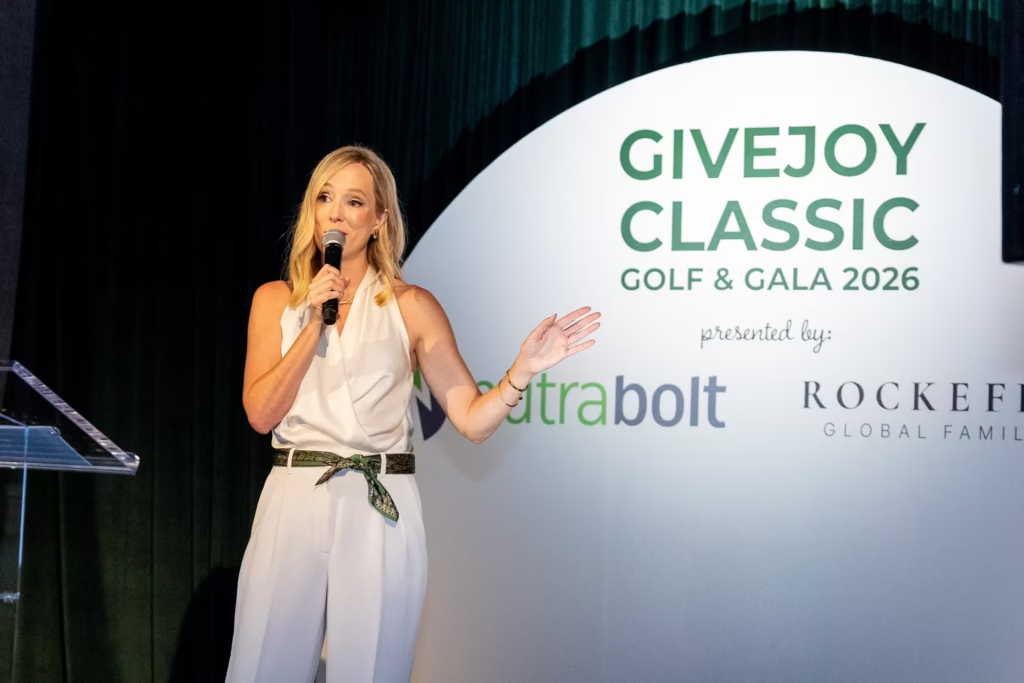
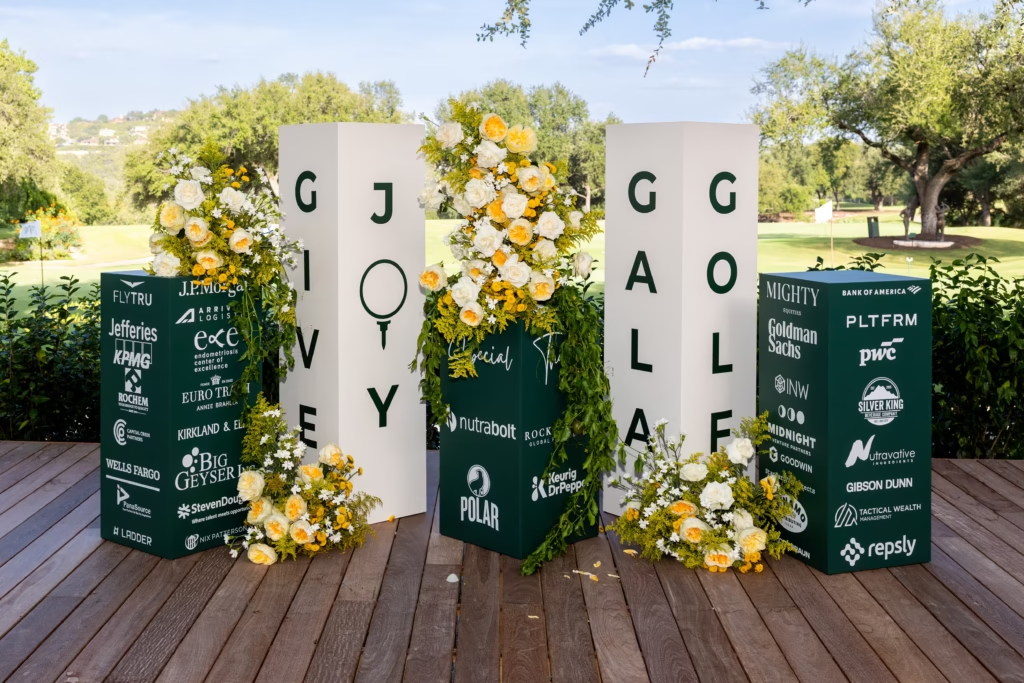
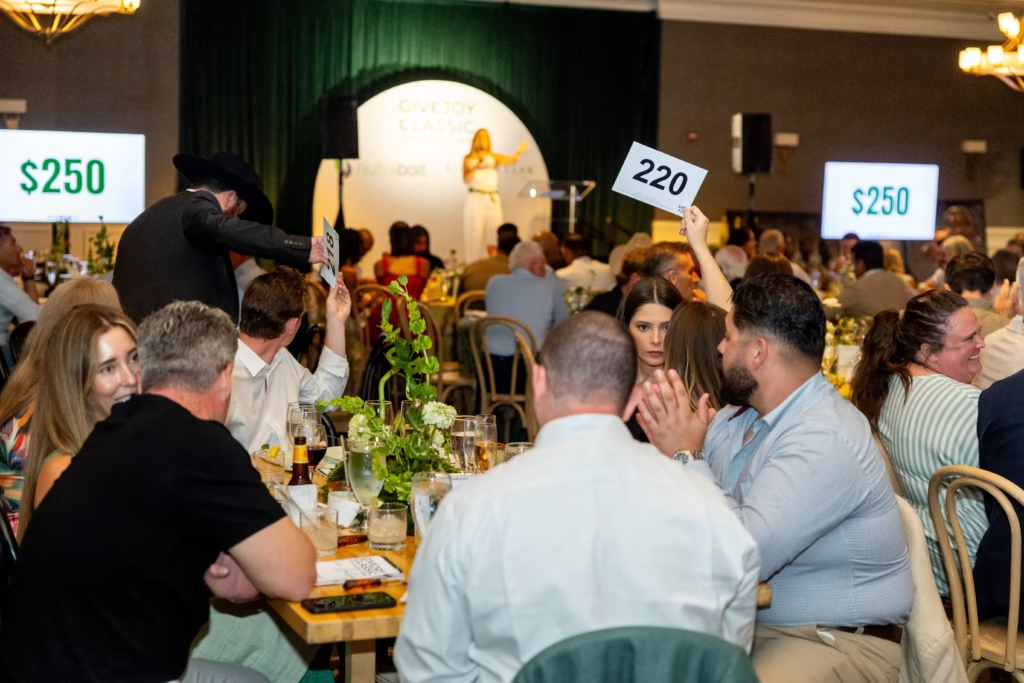
I saw an incredibly well run golf gala this September, at the GiveJoy Classic Golf and Gala for the GiveJoy Foundation. The golfers came in off the course still ribbing one another about a missed putt on the 14th hole. That same friendly, competitive energy carried on into the night during the live auction, where teams that had been rivals all afternoon found themselves bidding against each other for the same lots.
Why a Charity Golf Tournament Works (and Where Most Leave Money on the Table)
A golf tournament gives you something no gala can, which is four to six hours of your supporters’ undivided company. Your attendees arrive in a good mood and spend the afternoon with the people they chose to play with, so by the time they sit down to eat, they’ve had a whole day to absorb why they’re there. Sponsors love the format for a similar reason, because a sponsored sign at a hole or a branded golf cart sits in front of the same group of people all day long instead of flashing past on a slide.
Golf is also a generous sport. The World Golf Foundation puts golf’s charitable impact at nearly $4 billion a year, and there’s no shortage of players to draw on, with Americans playing a record 500 million-plus rounds in 2025, according to the National Golf Foundation.
Here’s where most tournaments leave money on the table, though. Registration fees tend to cover the green fees, carts, lunch, and prizes and not much else, so the golf itself often only breaks even. Whether your tournament turns into a real fundraiser or stays as ‘a very nice day out’ is usually decided druign the evening part of your event, which is the part of the day that often gets the least planning.
Start With a Net Goal and a Realistic Budget
Set your fundraising goal as the amount you want to net for your mission, then work backwards. A gross number looks good on a poster, but it hides how much of the day the course quietly takes back.
Your costs fall into two halves. On the golf side, you’ll have the per-golfer green fee, cart rental, course staffing, hole-in-one insurance, prizes and signage. On the evening side, you’ll have the dinner itself, which usually comes with a food and beverage minimum, plus everything the auction needs to work. Get written quotes for both halves early, because food and beverage minimums have a habit of growing once you’re committed to a date.
Plan the auction into the budget from the very first draft. That means a sound system that carries to the back of the room, a riser or small stage so the auctioneer can see every paddle, screens or printed displays for the lots, and the auctioneer’s fee. These are the line items committees most often try to squeeze in at the end with whatever money is left, and they’re the ones that decide how much the night raises, because the live auction and the paddle raise are where a golf tournament’s profit really comes from.
Choosing the Date, the Course and the Format
When to Start Planning
Give yourself six to nine months. Spring and fall are peak season for golf fundraisers, and the courses and auctioneers people want book up early, so lock in both before you finalize much else. If you’re reading this in January with a May tournament in mind, you’re right on the edge, and those two calls should happen this week.
Booking the Course
Courses want outside events because they fill tee times and bring in food and drink revenue, which gives you more room to negotiate than you might think. Ask directly for a nonprofit rate. Look at off-peak days, which are often cheaper and easier to book, and read the food and beverage minimum carefully before you sign anything.
Scramble or Best Ball?
For most fundraisers, play a scramble. Everyone tees off, the team picks the best shot and all four players hit from there, so a beginner and a scratch golfer can share a cart without anyone feeling embarrassed, and the pace stays steady.
Best ball, where everyone plays their own ball and the team takes the lowest score on each hole, suits a more serious and competitive field, but it runs slower, and a slow round means tired golfers at dinner.
Book the Dinner Room Like It Matters
This is the part committees skip. When you tour the course, look at the room where you’ll eat as carefully as you look at the greens. Check that every table can see the front and that there’s space for the sound and staging you’ve budgeted for, and find out whether the course has its own sound system or you’ll need to bring one in.
Sponsorships That Cover the Cost of the Day
Most golf sponsorship packages follow a familiar ladder, with a title sponsor at the top, then hole sponsors, a beverage cart sponsor and a hole-in-one contest sponsor. Hole sponsorships in particular are an easy yes for local businesses.
Add a dinner and auction sponsorship to that ladder and price it at a premium, since the sponsor who owns it gets thanked from the stage right before the bidding starts. When you meet with sponsors, ask for more than a check, too, and find out whether they’ll underwrite or donate a live auction lot. A sponsor’s own experiences, such as a suite at a big game or a week at a company vacation property, often make the strongest lots of the night, and they cost the charity nothing.
If you’re combining a few smaller donations into something worth bidding on, my guide to bundling auction packages walks through how to do it.
Selling Teams, Players and Dinner-Only Seats
Make registration easy whichever way someone wants to take part. Sell foursomes as your main product, with an early-bird price to bring commitments in sooner, and offer individual player spots for people who’d like to be placed on a team.
Then give every player a simple way to bring a guest to dinner. A dinner add-on at checkout lets a player bring a partner or a friend in one click, without filling in a separate form. Sell dinner-only tickets on their own as well, for supporters who’d love to be there but can’t play, whether that’s a board member who doesn’t golf or a sponsor who’d rather skip the early tee time. Every one of those guests is another paddle in the room when the auction starts.
Whatever you sell, take a card on file at registration. When someone wins a lot, you want paying for it to take seconds, and you don’t want your team chasing invoices the following week.
Golf Tournament Fundraiser Ideas for the Course
On-course games are fun and they add up, so include a few. The ones that consistently work are mulligans, a games bundle sold at check-in, closest to the pin, longest drive, and a hole-in-one prize, which you should insure rather than gamble on. A raffle works well too, especially with prizes golfers actually want, such as a round at a private course or a lesson with a pro.
If you’d like to run a silent auction with mobile bidding during play, it’s a nice way to build momentum, as long as it’s there to warm people up for the live auction rather than replace it.
The one warning I’d give is not to nickel-and-dime your players on every hole. If someone has been asked for another $20 at every tee box since breakfast, they sit down to dinner feeling tapped out, and that’s the moment you most need them feeling generous.
The Awards Dinner: Where the Real Money Is Raised
Why Golfers Bid Well After the 18th Hole
By the time golfers come in off the course, something has happened that no cocktail hour can manufacture. They’ve spent the whole day together, they’ve been ribbing each other since the first tee, they’re fed and relaxed, and the competitive streak that had them arguing over a two-foot putt is still very much switched on.
I love auctioneering that room. Paddles go up more easily there than they do at a formal gala where half the tables met each other over the salad course, because everyone already feels like part of the same day.
The Run of Show That Protects Your Auction
The order of the evening matters more than most committees realize. The run of show I recommend for a golf dinner looks like this:
- Dinner is served while golfers settle in and the scores are finalized.
- Awards, kept quick: name the winners, take the photo and move on.
- A short mission moment, so the room remembers why it’s there.
- The live auction.
- The paddle raise.
Awards are where these evenings usually lose their momentum. Every flight winner and contest prize can turn into twenty minutes of applause and photos while the room drifts toward the bar, so present them briskly and save the long thank-yous for the printed program and your follow-up emails. Keep silent auction pickup closed until the paddle raise is over, too, because the minute people start collecting their items, they start heading for the door.
My guides to building a charity gala program and the gala mission moment go deeper on both.
Building a Live Auction for a Golf Crowd
Plan five to nine live lots. That range holds no matter how many people are in the room, because it’s what keeps the pace brisk and the energy high from the first lot to the last. What should change with your crowd is the type of item and the price point. A room full of corporate sponsors with serious giving capacity can support one or two true showstoppers, while a smaller community tournament will do better with lots pitched at what that particular room can comfortably spend.
Golfers are easy to buy for, which helps. The lots I see perform well at golf dinners include:
- A bucket-list golf trip to a famous course or region
- A round at a private club, hosted by a member
- A lesson series with a teaching pro
- Premium seats or hospitality at a major sporting event
- A golf getaway weekend for four
- Next year’s foursome, with VIP perks and a hole sponsorship in the team’s name
If you’re still deciding on numbers and pricing, I’ve written more about how many live auction items you should have and how to price charity auction items, and there are more ideas in my list of the best live auction items.
The Paddle Raise
The paddle raise, sometimes called a fund-a-need, comes right after the last lot. Tie it to one concrete thing the money will do, ideally the same story the room just heard in the mission moment, then call out giving levels starting high and working down, so everyone in the room has a level they can say yes to. After a day on the course, people genuinely want to put a number on what the day meant to them, and the paddle raise gives every guest a way to do that, including the ones who didn’t win anything in the auction.
If you’ve never run one, start with my guide to what a paddle raise is and how it works.
Who Should Be on the Microphone
Ideally, two separate people. The host or MC runs the evening, welcoming everyone and presenting the awards, while the auctioneer runs the auction and the paddle raise. They’re different skills, and splitting them means each person can do their part properly.
A golf crowd is relaxed and chatty, which is wonderful for the mood and tricky for an auction, so a professional auctioneer earns their fee here by holding the room’s attention and keeping the bids moving. I bring my own bid spotters to every event. We call them the cowboys, and they work the tables and make sure no paddle goes unseen, even at the back of the room. I also work hard on my enunciation, because the chant can intimidate anyone who isn’t used to auctions, and nobody should miss their chance to bid because they couldn’t follow the numbers.
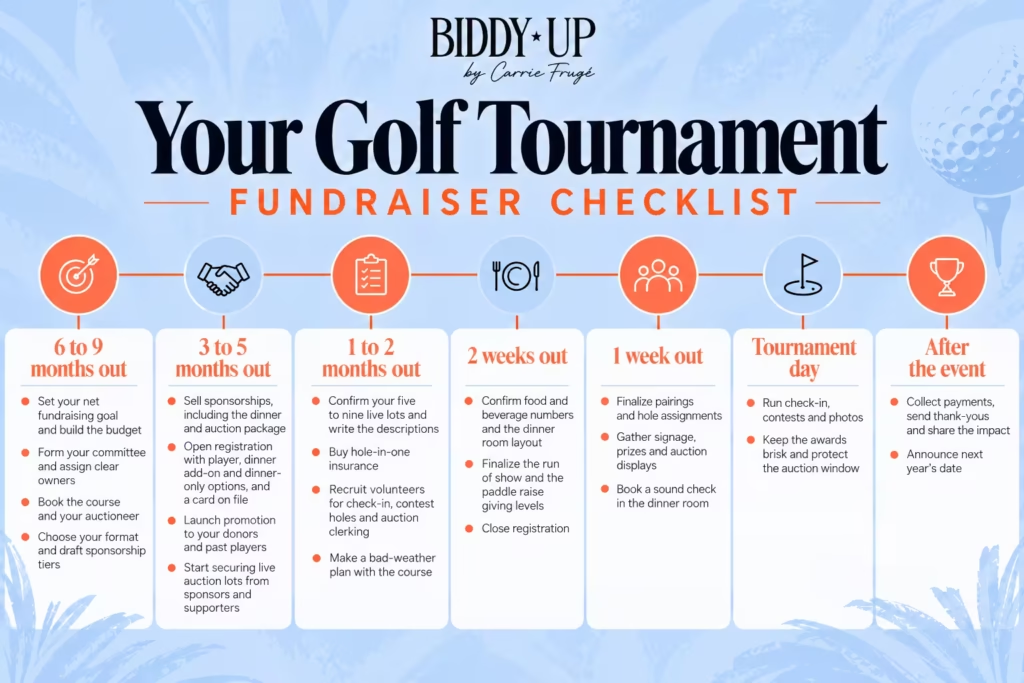
Your Golf Tournament Fundraiser Checklist
Use this timeline as a starting point and adjust it to your own date. You’ll notice the auction shows up at every stage, because that’s how it ends up ready on the night.
After the Last Putt
Send thank-yous to sponsors and players within a week, while the day is still fresh, and tell them what the money will do with specific numbers wherever you can. Collect any outstanding payments promptly, which is far easier when every player has registered with a card on file. Then put next year’s date out early, because the best time to sell next year’s sponsorships is while this year’s sponsors are still smiling about the photos.
A golf tournament can be a lovely day out or a serious fundraiser, and the difference usually comes down to how much thought went into the hour after the 18th hole. If you’re planning a tournament and want your dinner to be the part people are still talking about next spring, I’d love to hear about it.
Tell me about your event, and let’s make that room count.
Where auction performance meets purpose
Make Your Golf Dinner the Most Generous Room of the Day
Biddy Up brings professional auctioneering and a team of bid spotters to your awards dinner, so a great day of golf becomes a night that raises serious money for your mission.
Start the Conversation Explore Services