
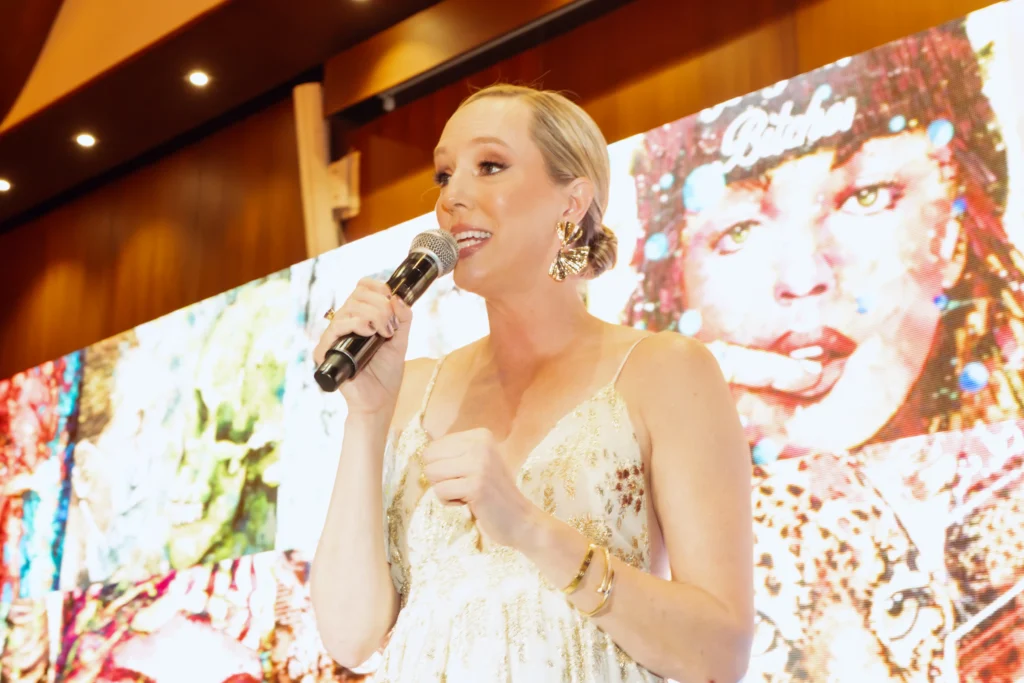
The order your gala runs in has a direct, measurable effect on how much your auction raises, often as much as the items themselves or the audience in the room. Most planning committees spend months on the guest list and the venue, then build the actual run of show in the final weeks, almost as an afterthought. That sequencing is backwards. The schedule is the structure that builds toward your auction and paddle raise, preparing donors to give the most money when it counts.
I’ve built run-of-show timelines for more than a hundred nonprofit galas since 2017, in rooms as small as eighty guests and ballrooms holding well over a thousand. The pattern holds across nearly all of them: the events that raise what they should are the ones where the program was built with intention, section by section. The ones that underperform usually have strong items and a generous room, but a schedule that worked against its own auction instead of for it.
What a Gala Program Actually Is
A charity gala program is more than a card displaying a timeline sitting at each place setting. It’s the emotional architecture of the whole night, the order guests move through, from the moment they walk in to the moment they leave.
That’s a different question from auction program structure in the strategic sense, the pacing and sequencing decisions that make a live auction itself perform. I’ve written about how to plan a charity gala auction that raises more money if you want the deeper “why” behind how items should be ordered and paced once the live auction starts. This piece is about everything around it, before it and after it: the literal run of show, and where each piece belongs on your fundraising event program.
Here’s the order I build toward for the vast majority of my clients, and the reasoning behind each piece.
Arrival and Cocktail Hour
This is where your silent auction lives, if you’re running one, alongside check-in and bar service while guests find each other and settle in.
Keep this window to sixty or seventy-five minutes. Run it longer and energy starts leaking out before the night has properly begun. Guests who arrived early start eyeing their table, and the ones running late feel like they’ve already missed something.
Silent bidding should open the moment doors open, not fifteen minutes in. Every extra minute a guest holds a bid sheet before dinner is a minute of engagement you don’t have to manufacture later in the night.
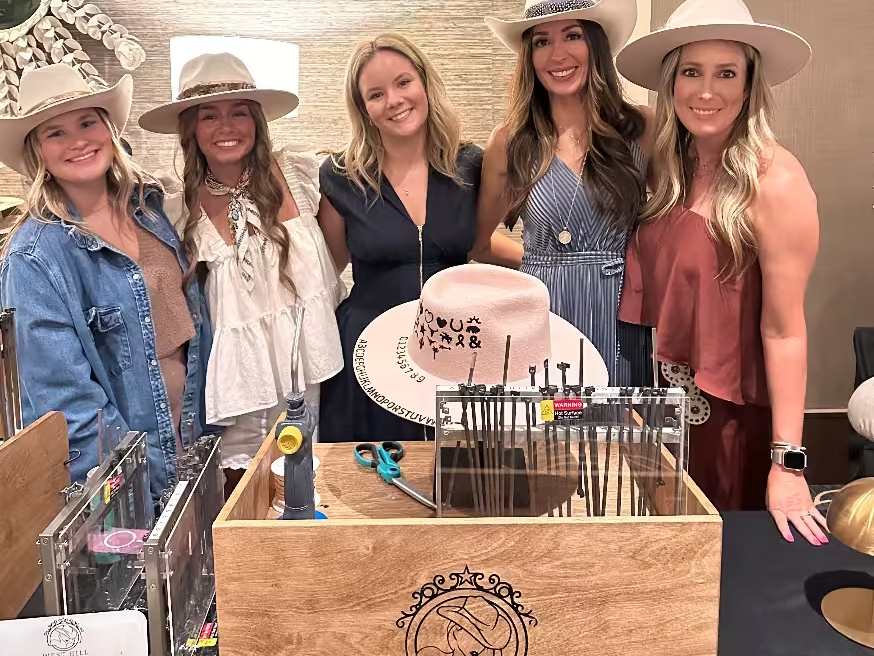
Cocktail hour is also where it’s nice to build in a small activation, something interactive tied to the auction itself: a photo moment with a signature live-auction item, a raffle add-on, a quick game tied to the evening’s theme. The right activation gets guests talking about the auction before they’ve even sat down, which pays off once the live portion opens.
Welcome
Once guests are seated, a short welcome from your board chair or executive director, ideally under five minutes, sets the tone for the evening and settles the room before dinner service begins.
Dinner Service, With the Silent Auction Still Open
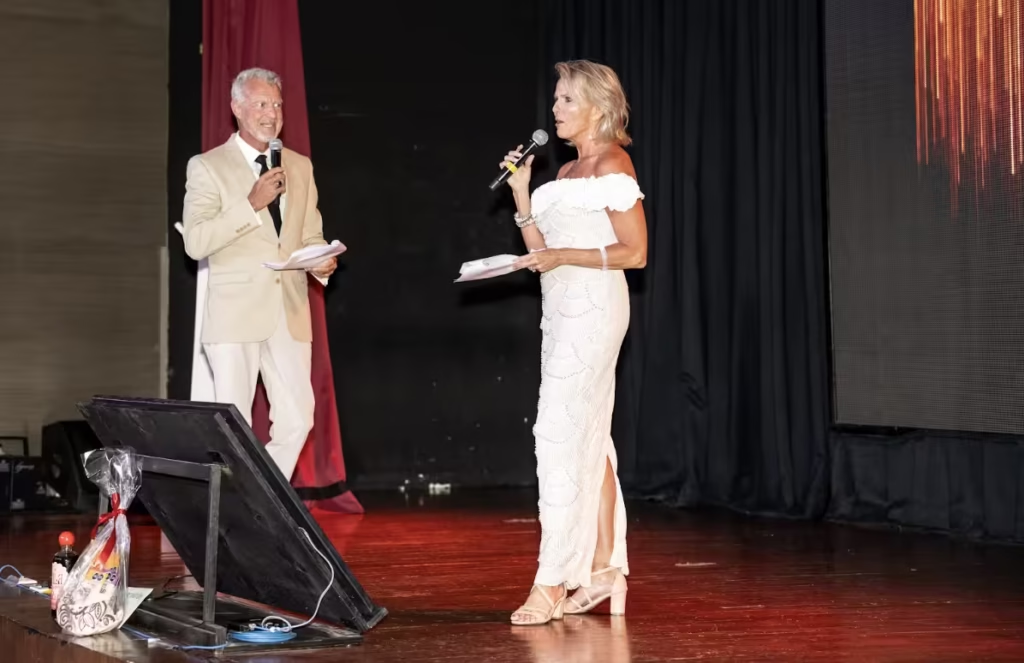
Dinner runs alongside continued silent bidding and is usually the longest stretch of the night. It’s tempting to let the room simply relax through it. Don’t let it go fully quiet. A brief remark from your emcee between courses, or a reminder that silent bidding is closing soon, keeps the auction present in the back of people’s minds even while they’re eating.
Silent Auction Close
Close silent bidding partway through dinner, generally between the main course and dessert. If you’re running paper bid sheets, your runners need time to collect them and confirm winners before that information reaches checkout, ahead of the live auction and paddle raise asking for the room’s full attention. Most galas now run mobile or online bidding, which closes and tallies automatically, so this manual buffer matters less than it used to, though it’s still worth building in for smaller events still working off paper sheets.
The Live Auction
This is the center of gravity for the whole evening, and it belongs immediately after dinner is fully cleared, plates gone, not just paused, before anyone has started checking the time or reaching for their phone. A room still picking at food or flagging down a server won’t give the stage the attention it deserves.
I keep the live auction lean no matter how large the room is, generally five to nine items, sequenced with care. That holds a room’s attention far better than a longer list that starts strong and fades by item eleven. Room size changes the price point and type of item on the live auction stage, not the count. A packed ballroom can support one or two true showstoppers priced into five figures. A more intimate room does better with items pitched closer to what its own donors can comfortably spend. For the full case on how to sequence and pace those items once the live auction opens, that’s exactly what my piece on planning a charity gala auction walks through. For your program, the short version is simpler: give the live auction its own uninterrupted block, don’t let anything compete with it, and don’t rush into what comes next the second the gavel drops.
Mission Moment
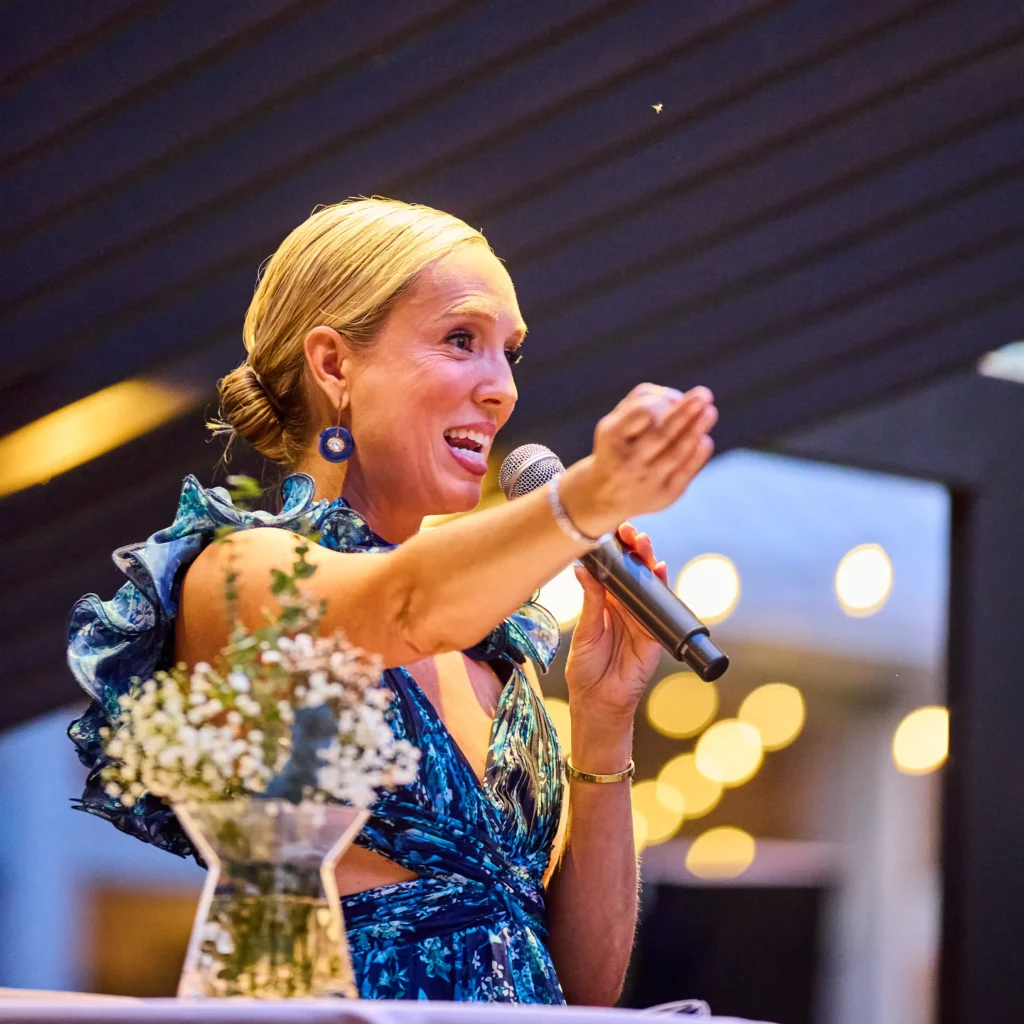
Right after the live auction closes and before the paddle raise opens, I build in a short, real mission moment: a beneficiary telling their own story, a live speaker, or a video, depending on what the organization has access to. This isn’t the welcome-remarks kind of moment. It’s a deliberate reset, a chance to pull the room’s energy away from the competition of the live auction and refocus it on why everyone is actually in the room.
I saw this play out at KKIS: the mission moment placed right before the ask changed the emotional temperature of the room in a way a mission moment earlier in the night couldn’t have, because guests were already warmed up by the live bidding and ready to be reminded what all of it was actually for. Guests who just spent fifteen minutes competing over items respond differently to a specific, human story than guests who are still finding their seats.
Keep it tight, three to five minutes at most. It only has one job: make the room feel the mission again, right before you ask them to give without getting anything back.
Paddle Raise or Fund-a-Need
I place this directly after the mission moment, while the emotional reset it just created and the energy from live bidding are both still alive in the room. Some planners prefer running the ask earlier, to warm the room up for generosity first, or skipping a second emotional beat altogether. I’ve tried it multiple ways, and for most galas, running the paddle raise immediately behind a well-placed mission moment wins out, because guests who’ve just been reminded why they’re there, right after competing over auction items, are primed to give again without a cooling-off period sitting in between.
Closing Remarks and Checkout
Keep this part brief: a short, genuine thank you and clear checkout instructions. If you have a real-time total to share, this is where it goes. Guests have already given generously by this point in the evening, and a drawn-out closing sequence after the emotional peak of the night tends to dilute the ending rather than elevate it.
Building Your Own Nonprofit Gala Program
Timing should flex with your venue and your guest count. A downtown ballroom moves at a different pace than an intimate donor dinner in someone’s backyard, and that’s fine. What holds steady across nearly every version of this I’ve built is the underlying logic: don’t let anything in the program, especially the live auction, compete with something else for the room’s attention. Give it its own moment, right when the room is most primed to give.
If you’re putting together your fundraising gala program and can’t quite place where something belongs, or last year’s numbers came in lower than the room and the items should have been winners – it’s usually a sequencing problem, not a generosity problem. It’s exactly the kind of thing I like working through with a planning committee well before invitations go out, so the printed program and the actual night match up.
Reach out and let’s build a run of show that gives your auction the room it needs to do what it’s capable of.
Where auction performance meets purpose
Build a Charity Gala Program That Sets Up Every Dollar
Biddy Up builds run-of-show timelines with nonprofit committees so the printed program and the actual night both work toward the same auction.
Start the Conversation Explore Services