
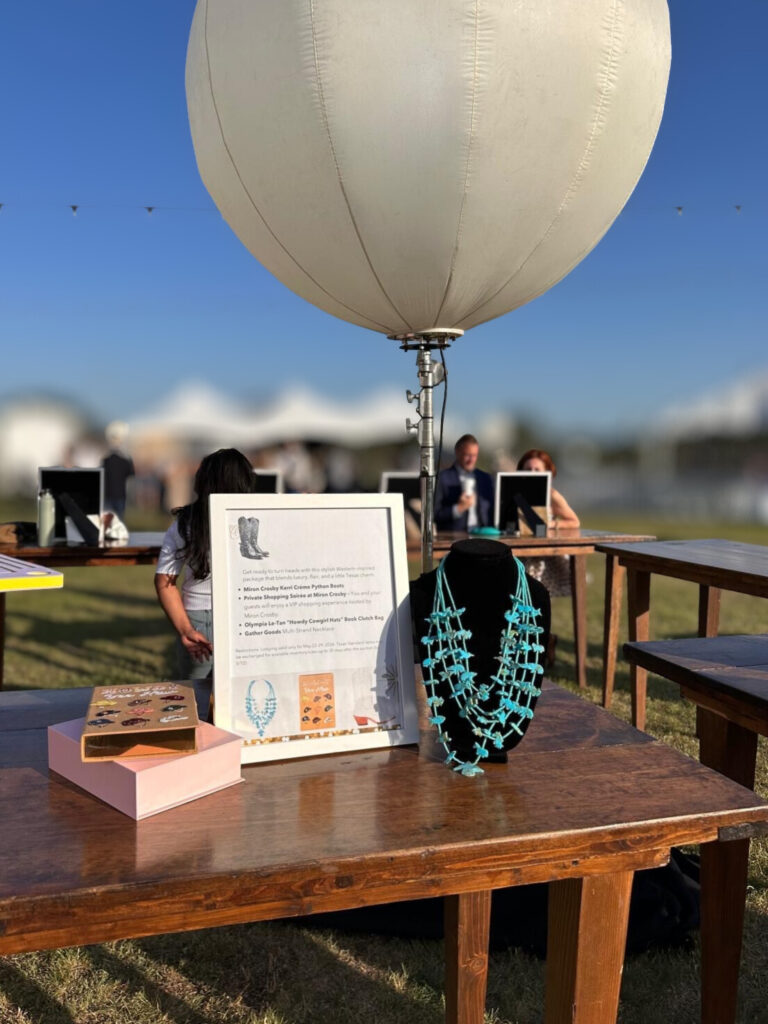
Not all silent auction items are created equal. Two events can have similar-looking selections of items — travel packages, spa vouchers, restaurant experiences — and produce completely different results. One drives competitive bidding across the room. The other feels uninspiring, with scattered bids and plenty of untouched items.
The difference isn’t luck. It’s selection.
The most effective silent auction items aren’t just “nice to have.” They’re chosen because they’re easy to understand, easy to want, and easy to bid on in an event environment.
If you’re planning your silent auction item list, the goal isn’t variety. It’s performance.
What Makes a Silent Auction Item Successful
Before looking at specific categories, it helps to understand what actually makes an item work.
Broad appeal
Items that attract multiple bidders will always outperform niche ones. Even if something is high-value, if only one person in the room wants it, there’s no competition — and no price growth.
Perceived value vs cost
This is where silent auctions can outperform traditional sales. If an item feels like a “good deal,” people are more willing to engage. That doesn’t mean cheap — it means the value is clear and easy to justify.
Easy to understand
If someone has to stop and figure out what an item includes, how it works, or whether they’ll use it, you’ve already lost momentum. The best items can be understood in seconds.
Competitive pricing range
Items should sit within a range that encourages multiple bidders. Too high, and people hesitate. Too low, and you limit the upside. The goal is to invite bidding, not restrict it.
The Best Silent Auction Item Categories
There are certain categories that consistently perform well across different types of events.
Not because they’re trendy — but because they align with how people actually make decisions in the moment.
Experience-Based Items
Travel packages, VIP access, private dinners, and behind-the-scenes experiences, are often the highest-performing items in any auction. They work because they offer something people don’t normally buy for themselves. There’s a sense of occasion attached to them — something memorable, something different from everyday spending.
They also create emotional pull. Guests can picture the experience, who they’d go with, how it would feel. That’s what drives bidding beyond logic.
Where people go wrong is overcomplicating them. If the terms are unclear, dates are restrictive, or redemption feels difficult, hesitation creeps in quickly.
Examples that consistently perform:
- A weekend stay at a boutique hotel with breakfast included and flexible dates
- A private chef dinner for 6 hosted at the winner’s home
- VIP concert or event tickets with backstage access or meet-and-greet
These work because they are specific. Guests can instantly picture using them, which removes hesitation and encourages early bidding.
Local Business Donations
Think restaurants, spas, salons, wellness services, local experiences. These might not feel as exciting as a travel package, but they’re often more reliable. They’re familiar. Guests already know the brand, or at least understand what they’re getting. There’s no learning curve, no uncertainty about whether they’ll use it. That makes them easy to bid on.
They also tend to sit in a more accessible price range, which means more bidders and more competition.
A well-curated selection of local partnerships can quietly carry a large portion of your auction revenue.
Examples that work better when positioned correctly:
- Dinner for Two at [Well-Known Restaurant] with wine pairing included
- Signature Massage + Blow Dry Package at a recognized local spa
- 3-month boutique fitness membership with 2 private personal training sessions included
The shift here is simple — from “voucher” to “experience.” That change alone increases perceived value and bidding activity.
Group & Social Items
Wine tastings, cooking classes, boat days, group experiences. Anything that involves multiple people tends to perform well. It spreads the cost and increases the perceived value. It also introduces a social dynamic — one person spots it, then brings others into the decision.
These items also tend to feel more “fun” than transactional, which helps shift guests into a more active mindset during the auction.
Strong examples:
- Private wine tasting for 8 hosted by a sommelier
- Sunset catamaran charter for a group of 10
- Hands-on cooking class with a local chef for 6–8 guests
These items often create clusters of bidders rather than individuals — and that’s where competition builds quickly.
Lifestyle & Upgrade Items
Home services, childcare, cleaning, fitness packages, subscriptions. These don’t always stand out at first glance — but they perform. They work because they align with existing spending. People already pay for these things. You’re not asking them to spend on something new, just to upgrade something they already use.
They’re also practical, which means they appeal to a broader range of guests than more niche or novelty items.
High-performing examples:
- 3 months of weekly home cleaning services
- 10 hours of premium babysitting or childcare support
- Full car detailing package with maintenance service
- Personal training package with a well-known local coach
These are easy “yes” decisions — and that’s exactly what you want in a silent auction environment.
Silent Auction Basket Ideas That Actually Work
When you have a lot of auction items, it can be a good idea to bundle a cohesive set of items together to make an auction ‘basket’. But making a basket that is truly amazing takes planning and thinking ahead. The difference between a basket that performs and one that gets ignored is usually clarity.
What doesn’t work is a collection of loosely related items. A few generic products, a voucher, something decorative — it might look full, but it doesn’t feel valuable.
Strong basket examples:
Date Night Package
- Dinner for two at a known restaurant
- Bottle of wine or pairing included
- Transport credit (Uber or similar)
- Optional add-on: show tickets
Wellness Reset Package
- 90-minute massage at a specific spa
- Facial or recovery treatment
- Fitness class pass
- Sauna or recovery session
Family Fun Day
- Tickets to a local attraction
- Meal vouchers
- Activity add-on (mini golf, water park, etc.)
How to Source Silent Auction Items
Sourcing is where many auctions either gain strength or lose direction. Local partnerships are often the easiest place to start. Businesses are usually open to donating in exchange for visibility, especially if the audience aligns with their customer base.
Sponsors can also contribute meaningfully, particularly if the opportunity is positioned as part of their broader involvement in the event.
Donor networks are another strong source. People are often willing to give more than expected — especially if they understand how the item will be used.
Past contributors are worth revisiting. If someone donated successfully before, there’s a good chance they’ll do so again.
The key is not just collecting items, but curating them. Not everything that’s offered needs to be included.
How Many Items Should You Include?
This is one of the most common questions — and one of the most misunderstood.
According to Doug Sorrell in his book Beneath the Gavel: A Charity Auctioneer’s Complete Guide to Fundraising, a good benchmark is one silent auction item for every seven attendees. For example, if you expect 225 guests, you should plan for approximately 32 silent auction items.
So in practical terms:
- 100 guests → ~12–15 items
- 200 guests → ~25–30 items
- 300 guests → ~40–45 items
This works because silent auctions rely on multiple bidders per item.
When you exceed this ratio, attention gets diluted. Instead of several people competing for the same item, you end up with isolated bids — or worse, items with no bids at all.
It’s tempting to keep adding items — more donors, more baskets, more variety — but beyond a certain point, each additional item reduces the pressure that drives bidding.
The strongest auctions are slightly restrained. They prioritise fewer, more competitive items over a larger, quieter inventory.
How to Spot a “High-Performing Item” Before the Event
A simple test you can use when reviewing items to include in your auction.
Ask yourself:
- Would at least 5–10 people in the room realistically want this?
- Can someone understand it in under 5 seconds?
- Is it easy to imagine using it within the next 3 months?
If the answer is no to any of these, it’s likely not a strong auction item.
What NOT to Include in Your Silent Auction
This is one of the most valuable filters you can apply.
Overly niche items
If only one or two people in the room might want it, it’s unlikely to perform well.
Low perceived value items
Even if something has a real cost, if it doesn’t feel valuable, it won’t attract bids.
Confusing bundles
If it’s not immediately clear what the item includes or how it works, people move on.
Items with heavy restrictions
Blackout dates, complicated redemption processes, or unclear terms reduce confidence and slow down decision-making.
Removing weak items is just as important as adding strong ones.
Final Thought: Better Items = Better Bidding
The success of your silent auction isn’t determined by how much you collect. It’s determined by how well those items perform in the room. The right items create competition. They draw people in, encourage repeat bidding, and build energy across the event.
If you want your auction to actually perform, it’s not just about having good items — it’s about knowing which ones will drive real bidding.
Biddy Up works with organizations to curate and structure auctions that maximize participation, build momentum, and ultimately raise more money for worthy causes across Texas, the USA, and internationally. If you want to work with us to help boost revenue at your next auction, schedule a call today.
Where auction performance meets purpose
Having good items is one thing. Choosing the right ones is what drives results.
Biddy Up helps nonprofits curate and structure auctions that create real competition, stronger bidding, and better fundraising outcomes — from item strategy through to live execution.
Start the Conversation Explore Services