
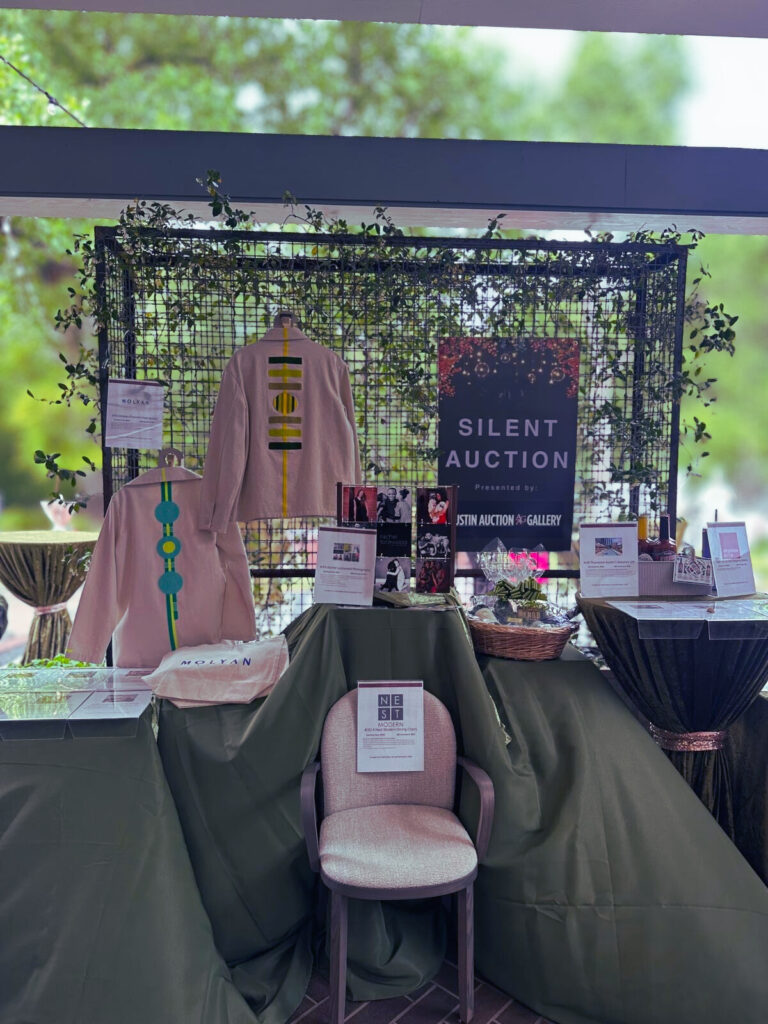
As you walk into most fundraising auctions, you’ll see the same thing. Tables filled with items. Baskets that are beautifully wrapped and topped with a bow. Trips, vouchers, experiences – all laid out exactly as they should be.
And yet, half the room isn’t bidding.
People are browsing. Smiling. Maybe they’re placing one safe bid early in the evening. But there’s no real energy, no sense of competition building. By the time the auction closes, a lot of items have barely moved, and the ones that do sell often go for far less than they could have.
This is where most silent auctions fall short. It’s not the items. It’s how they’re used.
Because a silent auction isn’t just a collection of donations – it’s a behavioral environment. And if that environment isn’t designed intentionally, people default to passive.
If you’re looking for silent auction ideas, the better question is this: how do you get people to actually engage?
Why Most Silent Auctions Underperform
The instinct to “add more items” is strong. And when people offer you things to include in your auction, its sometimes an impulsive reaction to take everything that is sent your way.
More donors, more baskets, more categories — it feels like you’re building value. It feels safer. If one item doesn’t tickle the fancy of the buyers, another might. But what actually happens is dilution.
When there are too many silent auction items, the attention of your audience fragments. Guests don’t know where to focus, so they skim. They walk past rows of decent options without stopping long enough to care about any of them. And without that pause, there’s no emotional connection – and without that, there’s no bid.
There’s also the issue of familiarity.
If guests have attended similar events before, they’ve likely seen the same types of items recycled. A spa voucher. A hotel stay with fine print. A themed basket that feels more decorative than intentional. I’m not saying that any of these are inherently bad. But they don’t create any excitement and urgency. And urgency is what drives bidding.
What Actually Drives Participation at a Silent Auction
Once you stop thinking about items and start thinking about behavior, things become much clearer.
There are a few consistent triggers that show up in every high-performing auction.
Competition Psychology
People are influenced by other people. When an item already has activity — multiple bids, visible interest — it signals value. It tells the next person, “This is worth going after.”
Without that signal, even strong items can sit untouched.
Price Accessibility
If everything feels expensive, most guests opt out before they begin. The first bid is the hardest one. You need items and starting prices that feel approachable enough to get people involved early. Once someone is “in,” they’re far more likely to stay engaged.
Emotional Appeal
People rarely bid based on pure logic. They bid because they can picture themselves enjoying something. A dinner with friends, a weekend away, a moment that feels different from their usual routine.
Objects can work — but experiences almost always outperform because they carry a story.
Ease of Bidding
This is often overlooked. If the process feels unclear, slow, or inconvenient, people disengage quickly. Whether it’s paper sheets or mobile bidding, the system should feel effortless. The less someone has to think about how to bid, the more likely they are to do it.
When these elements are working together, participation increases naturally. When they’re missing, even a well-stocked auction struggles.
The Structure of a High-Performing Silent Auction
This is where most of the outcome is decided — long before the event begins.
The number of items is one of the biggest levers you have. Fewer items mean more attention per item. More attention leads to more bids. It’s simple, but it requires discipline, because reducing items can feel like you’re reducing opportunity. In reality, you’re concentrating it.
Pricing tiers are just as important. A strong auction has a clear ladder — entry-level items that are easy to bid on, mid-range items that attract multiple bidders, and a few higher-value pieces that create aspiration.
If your pricing jumps too quickly, you lose people. If everything sits in the same range, you lose progression.
Layout also plays a bigger role than people expect. Where items are placed, how they’re described, how easy they are to understand at a glance — all of this affects engagement. Items that require explanation or feel visually cluttered tend to get skipped, even if they’re valuable.
Then there’s timing. A silent auction that closes quietly will perform quietly. A strong closing window — whether that’s a countdown, announcements, or visible last-call energy — brings people back to the tables or their phones. It creates urgency, and urgency creates bids.
Silent Auction Ideas That Increase Engagement
This is where most ‘Silent Auction Ideas’ blogs would list items (and we have one of those blogs separately here!) But the format matters more than the category.
The question isn’t “what should we include?” It’s “what will people engage with?”
Experience Based Bundles
A single item is great, but a bundled experience feels intentional. When you combine elements into something that resembles a full outing — dinner, activity, transport — it becomes easier for someone to say yes. There’s no planning required. It already makes sense.
Group Bidding Items
Items designed for multiple people tend to attract more attention. Not just because they can be shared, but because they introduce social dynamics. One person shows interest, others join in, and suddenly the item has momentum.
Upgrade-Style Items
These are quietly powerful. Services people already pay for — cleaning, childcare, maintenance — but presented as an upgrade or convenience. They don’t feel indulgent; they feel smart. That makes them easier to justify in the moment.
Interactive or ‘Exclusive’ Items
Anything that feels slightly dynamic performs better. Limited availability, time-based elements, or items that feel like they might disappear create a subtle pressure to act. And that pressure is often the difference between “I’ll come back later” and “I’ll bid now.”
How You Prepare Guests to Actually Bid
This is the piece that almost everyone overlooks. Most silent auctions are designed around the items — not the bidder.
Your guests walk into the room, and are only seeing everything for the first time, and are expected to immediately understand how to engage. Where to go, how to bid, what things are worth, whether they should start now or come back later. That’s a lot to ask in a live event environment.
Preparation matters more than people think. If you’re running an online or mobile auction, opening the catalogue before the event can completely change participation. It gives guests time to browse, shortlist items, and arrive already interested. Instead of starting cold, you’re starting with intent.
Timing also plays a critical role. If the auction closes too early, you lose bidders who haven’t fully engaged yet. If it closes too late, you lose urgency. If it closes while people are distracted — during dinner service, speeches, or key moments — you miss the final push that drives competitive bidding.
The best-performing auctions are deliberate about this. They create a clear window where attention is high and bidding feels active.
Then there’s the practical side, which is often underestimated. If you’re using mobile bidding, does the room actually support it? Is the Wi-Fi strong enough for hundreds of guests? Is phone signal reliable? Do guests know how to use the platform, or are they figuring it out in real time?
If the answer to any of these is no, participation drops — not because people aren’t interested, but because the process gets in the way. Once someone decides to bid, you don’t want anything slowing them down.
How to Use the Silent Auction to Set Up the Live Auction
This is where the real opportunity sits. The silent auction isn’t just a revenue stream — it’s a behavioral warm-up.
It teaches people how to participate. It lowers the barrier to entry. It gives them small wins and small losses, which makes the idea of bidding feel normal. By the time the live auction begins, your guests aren’t passive observers anymore. They’re already in the mindset of competing, of watching, of reacting.
It also gives you insight. You can see who is engaged. Who is bidding repeatedly. Who is comfortable spending. Those are your live auction bidders — the ones who will carry the energy in the room.
When the silent auction is structured well, the transition into the live auction feels natural. The room doesn’t need to be convinced to participate. It’s already happening.
Common Mistakes That Kill Participation
Most silent auctions don’t fail obviously, but underperformance can leave money on the table.
Too many low-value or filler items dilute attention and reduce perceived value across the board. When everything feels average, nothing stands out.
Poor presentation makes even strong items feel forgettable. If it’s not clear what something is, how it works, or why it’s valuable, people move on.
Weak pricing strategy either scares people away or prevents competition from building. Both outcomes reduce revenue.
Another common issue is disconnect. When the silent auction feels separate from the rest of the event, it loses importance. Guests treat it casually, and casual engagement doesn’t translate into strong bidding.
These aren’t complicated problems. But they require deliberate choices to fix.
Final Thought: This Is Where Engagement Starts
The most effective silent auctions don’t rely on luck, or on having the “right” donation. They’re structured to guide behavior — to move people from browsing to bidding, and from bidding to competing.
And that shift in your silent auction ideas is what changes the entire energy of the room.
Because once people are engaged, everything else becomes easier. The live auction feels less intimidating. The fundraising goals feel more achievable. The event itself feels more successful — not just because of the numbers, but because people were actually part of it.
Working With Biddy Up Can Boost Your Auction Income
If you’re planning a gala, this is where strategy has the biggest impact on your results.
A well-structured silent auction can drive strong participation — but for many events, it’s only part of the opportunity. When paired with a live auction, that early engagement can be turned into real momentum, often unlocking significantly higher revenue on the night.
Biddy Up works with organizations not just as a live auctioneer, but as a strategic partner — helping you design the full auction experience, from silent auction structure through to live bidding, flow, and guest engagement.
If you’re currently running a silent auction — or feel like your event could be doing more — it’s worth a conversation.
Where auction performance meets purpose
If your silent auction isn’t getting people to bid, it’s not an item problem — it’s a structure problem.
Biddy Up works with nonprofits to design auctions that actually engage the room — from item strategy and pricing to flow, timing, and live momentum. The result is more participation, stronger bidding, and better fundraising outcomes.
Start the Conversation Explore Services