
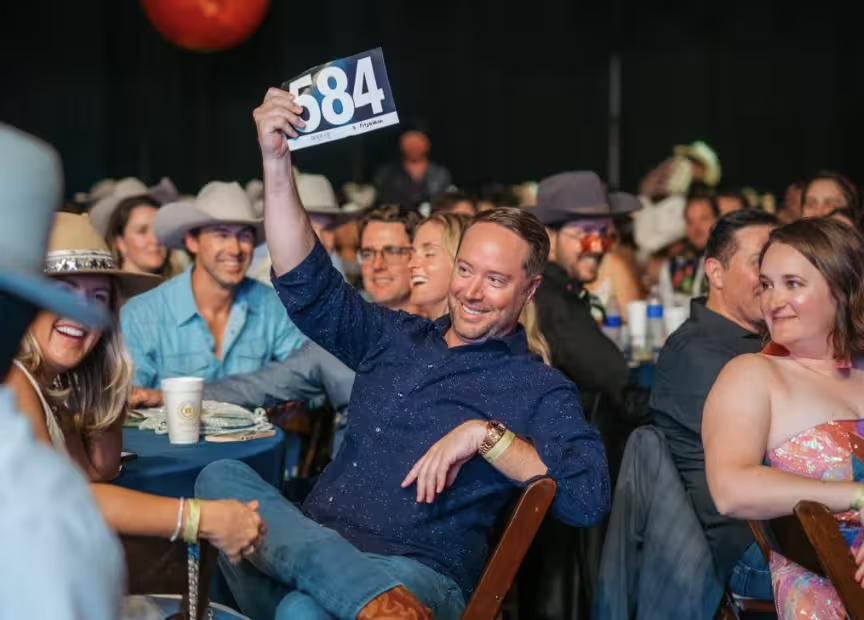
A board member of a nonprofit recently emailed me about having an auction at their annual gala. The venue was booked, the band had been sent the playlist, the seating chart was half finished, and almost as an afterthought, she wrote that the committee had been talking about maybe adding some kind of auction too, and did I think that was something they could still pull off.
I hear a version of that email more often than people would expect. Most galas get built in this order: pick the venue, then plan the entertainment and dinner.
And somewhere near the end, someone on the committee finally asks whether they should have an auction. It usually ends up being the single largest revenue line of the entire night, and it’s the often the piece of the fundraising puzzle that gets the least amount of planning time.
A charity auction (whether it be a live or silent auction) isn’t just a table you set up in the corner of a room that’s already been designed around dinner and dancing. It changes how the room needs to flow, what the timeline of your event looks like, and who needs to be staffed where.
Adding one to a gala that’s already taking shape is absolutely doable. It just has to be planned as its own piece of the evening, not squeezed into whatever time is left over once everything else is decided.
Decide What Kind of Auction Actually Fits Your Room
The first real decision is how big to build your live auction, not whether to include one. I recommend one for nearly every gala I work, no matter the size of the room, because it gives the night its single best shared moment: a room full of guests watching the same fundraising number climb together in real time.
The type of guest you have at your event and the number of guests can change the kind of items you might include in your auctions. I recommend keeping a live auction to somewhere around five to nine items to protect the pacing and the energy of the night. Whether I’m working a room of 70 or a room of 800, going much past that number of auction lots starts costing you the audience’s attention on the very items that matter most.
A bigger gala with a donor base that’s used to giving at a high level can carry one or two true showstoppers, maybe a week at a private villa with luxury amenities, or a marquee experience, priced well into five figures.
A more intimate gathering does better pitching items closer to what that specific room can actually spend, so bidding stays competitive instead of stalling out after the opening ask.
A silent auction plays an important supporting role alongside the live portion. Guests browse bid sheets or a mobile bidding app during the cocktail hour and bid at their own pace, quietly in the background, without asking anything of the program, this is a great way to complement the live auction, not replace it.
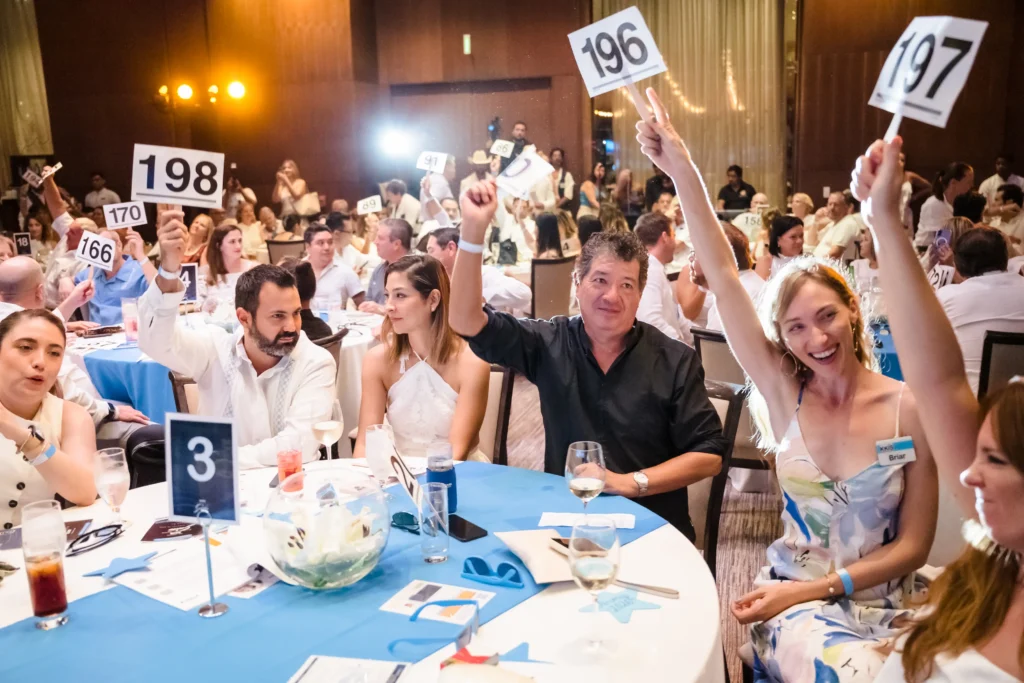
Size the Auction to the Gala, Not the Gala to the Auction
Once you know which formats you’re running, resist the urge to fill every inch of table space just because you have it.
A silent auction with sixty items in a room of 120 guests means most items get two or three bids and close for barely more than their value. I’d rather see thirty well-curated items in that same room, enough variety that different guests find something worth chasing, but not so much that attention gets spread too thin for real competition to build.
The same logic applies on the live side. Nine lots is already a lot to ask a room to sit through with full attention, and adding a tenth or eleventh because a board member’s cousin donated something usually costs energy on the lots that matter more.
Building the Timeline Around Two Different Rhythms
A gala already has its own rhythm before an auction ever enters the picture, moving from cocktail hour into dinner service, then a program, then dancing. The auction has to work inside that shape rather than compete with it.
Silent auction bidding should open the moment doors open (or even the week before with an online link), while guests still have a drink in hand and nowhere they need to be yet, and it should close before or right as dinner service starts.
Once people sit down at their tables, browsing largely stops, and a silent auction still open during dinner just creates confusion about whether it’s actually still running.
A live auction belongs after dinner and before dessert or dancing, while the room still has energy but before anyone has mentally checked out for the night. I usually push the paddle raise right after the live auction wraps, while the momentum from watching people bid is still in the room. Push it too late and you’re asking for generosity from a room that’s already thinking about the valet line.
Setting Up the Room So Guests Actually Bid
Where guests sit versus where the auction tables sit changes how much gets bid, and it’s one of the details committees overlook most. Silent auction displays need real light and enough space between items that guests can actually read what they’re bidding on, not a hallway table crammed against a wall.
If you’re running mobile bidding, put up clear signage with the closing time in more than one spot, because nothing kills a silent auction’s last few minutes like guests who didn’t realize it had already ended. And make sure your venue has the wi-fi capabilities for them to be logged in and bidding at the same time.
Checkout matters just as much as the display. A single overwhelmed volunteer trying to process forty winning bids while guests wait for their coats is a rough last impression on a night that otherwise went well, so plan for enough hands at checkout to keep that line moving.
Getting the Right Person to Run It
A live auction and a paddle raise both need someone on the mic who’s actually trained to read a room in real time, not just call out numbers off a script, and that decision affects your total more than almost anything else on this list.
Check out the difference on why a pro beats a volunteer every time, this blog goes deeper into what that comparison actually looks like in dollars.
Even a silent-auction-only event benefits from having one clear person, staff or a trained volunteer, whose whole job that night is watching the clock and managing the close time and auction distribution, instead of splitting that responsibility across whoever happens to be free.

Pricing and Curating Items for a Gala Crowd
Item selection works differently when an auction is folded into a gala than when it’s the entire event. I try never to put a similar version of the same item in both the silent and live auctions.
A weekend getaway on the silent tables and a comparable trip on the live block just means guests who want that experience wait to see which one goes for less, and both end up underselling. Every silent item needs a minimum bid that reflects its real value, not a nominal twenty dollars that lets it close for a fraction of what it’s worth.
You also need to think about the order of your live auction items. You don’t want to start with your showstopper item, your audience needs time to ‘warm-up’ first. And similarly, you don’t want it last either, because the guest who might be saving their bidding money and who doesn’t win it, might bid on something else if there are opportunities afterwards.
Ordering your live auction lots is something I support nonprofits with in our Biddy Up planning meetings, to make sure your live auction generates the most revenue.
Where Nonprofits Trip Up Adding an Auction In
Most of the mistakes I see come from treating the auction as something slotted into a program that was already finished. There’s no clear announcement when silent bidding opens, so half the room doesn’t realize it’s started until cocktail hour is nearly over. There’s no one assigned to manage the handoff from dinner into the live auction, so the MC and the auctioneer end up figuring out timing on the fly while the room loses momentum.
And it’s rare that anyone has decided ahead of time what happens to items that don’t sell, which leaves a committee scrambling the week after the event instead of already knowing the plan. None of this is hard to fix. It just needs to be decided before the night, not during it.
Getting It Right the First Time
I’ve walked enough committees through this same conversation to know that adding an auction to a gala you’re already planning doesn’t mean starting over. It means giving the auction its own seat at the planning table early enough to shape the room and the timeline, instead of getting squeezed into whatever’s left of a budget and schedule that were already set. It’s going to bring you the MOST revenue, so give it the attention and planning time that it deserves!
If your committee is having the same conversation my client had eight weeks out, or you’re still early enough to plan it right from the start, I’d love to talk through what would actually work for your event. Contact me today!
Where auction performance meets purpose
A gala already taking shape can still raise significantly more with the right auction plan built in.
Biddy Up helps nonprofits build a live auction and paddle raise into a gala that’s already underway, without disrupting the parts of the night that are already working.
Start the Conversation Explore Services