
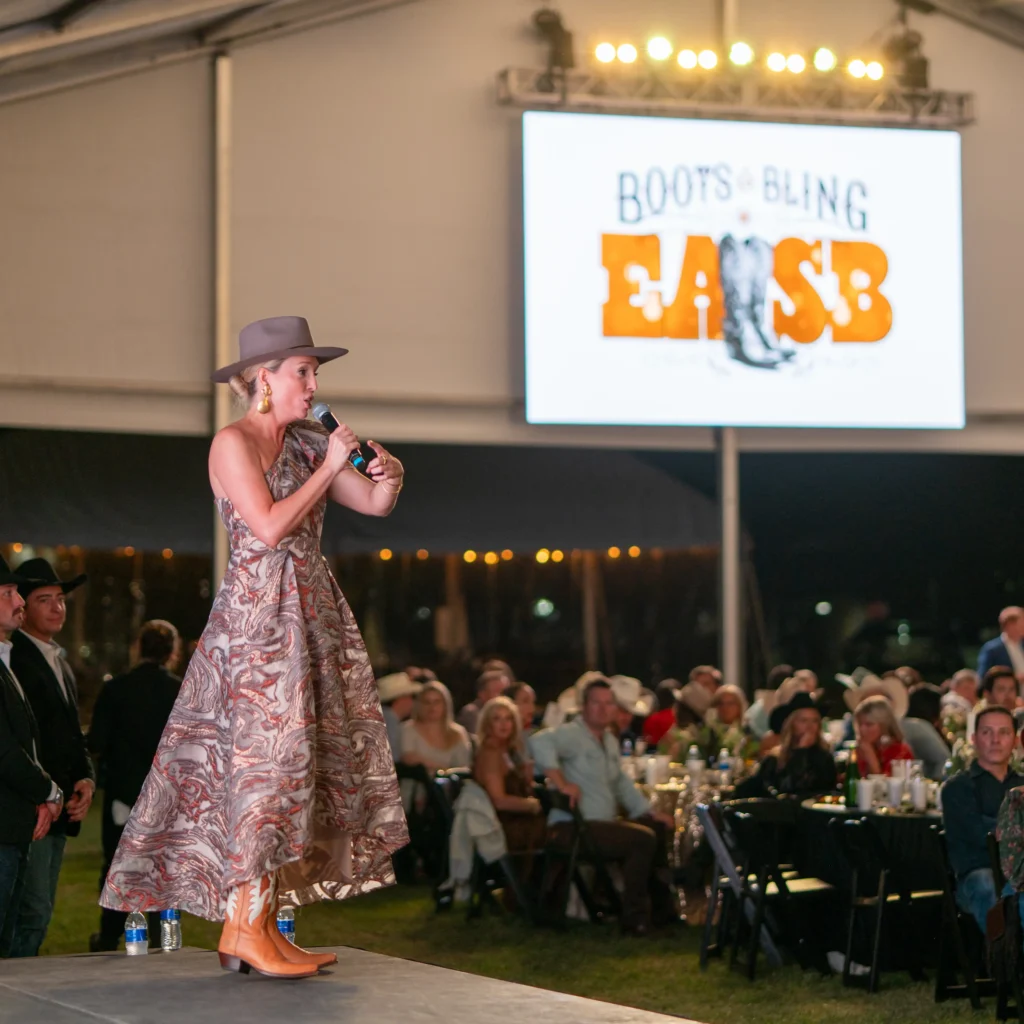
Most gala committees believe that the more items they can fit into their live auction, the more money they’ll raise. It feels intuitive. More donated packages should mean more chances to sell something, and more chances to sell something should mean more total revenue. But more is not always better, and often, a longer catalog is far more likely to work against you than for you.
I’ve called auctions for more than a hundred nonprofits since 2017 and pushed upward of $22 million across those rooms, and the pattern repeats every time. More items on the list doesn’t translate to more money raised.
A live auction exists to build competition, lot by lot, for as long as that competition can hold. Every item needs enough interested, qualified bidders in the room willing to fight over it, and a live auction that runs past the point where that fight is still alive stops raising money and starts testing everyone’s patience instead.
A live auction that’s working should feel fast and a little breathless. Guests should be disappointed when the gavel comes down on the last item, not glancing at their phone three lots before it. Exactly where you land inside that five-to-nine range, and which items make the cut, depends on your audience, the quality of what you have to sell, how the rest of your program is timed, and where the live auction sits next to your fund-a-need.
I’d rather auction seven exceptional lots than seventeen mediocre ones.
How Many Live Auction Items Should a Charity Auction Have?
Five to nine items is a strong starting point for the overwhelming majority of galas I work. I land on that range because it’s where a room can genuinely compete for what’s in front of it, and it holds whether you’re filling a four-hundred-seat ballroom or a hundred-and-twenty-guest dinner in someone’s backyard. A room with deep bidding history and a wide base of high-capacity donors can sometimes support a little more. A first-time auction or a smaller donor pool usually does better nearer the bottom of that range. Neither situation changes the range itself, only how honest you have to be about what that specific room, on that specific night, can compete over.
Where committees get into trouble is working backward from a target instead of forward from their inventory. “We need nine live items” is a planning shortcut that usually ends with a strong list padded out by a package nobody in the room particularly wants, just to hit a number that was never grounded in anything real. I’d rather look at what’s come in through procurement, weigh how many realistic bidders each piece could pull, and let the count fall out of that honest audit instead of the other way around.
This is exactly why I want to be part of the conversation before a catalog gets finalized, not handed a run sheet the week of the event. A committee looks at a table of generous donations and sees a list. I’m listening for which three or four of those donations have real bidder depth behind them, because that’s the difference between a lot that performs and one that limps to a single bid and an uncomfortable pause on stage.
The honest answer to how many live items you should have is: as many strong lots as your room can competitively support, and for nearly everyone I work with, that lands between five and nine.
Why More Live Auction Items Don’t Necessarily Raise More Money
Every additional item on your live auction list isn’t automatically additional revenue, because your inventory can end up competing with itself long before it competes for a bidder’s attention. Guests have finite budgets, and a room only has so many people willing to raise a paddle for four figures or more.
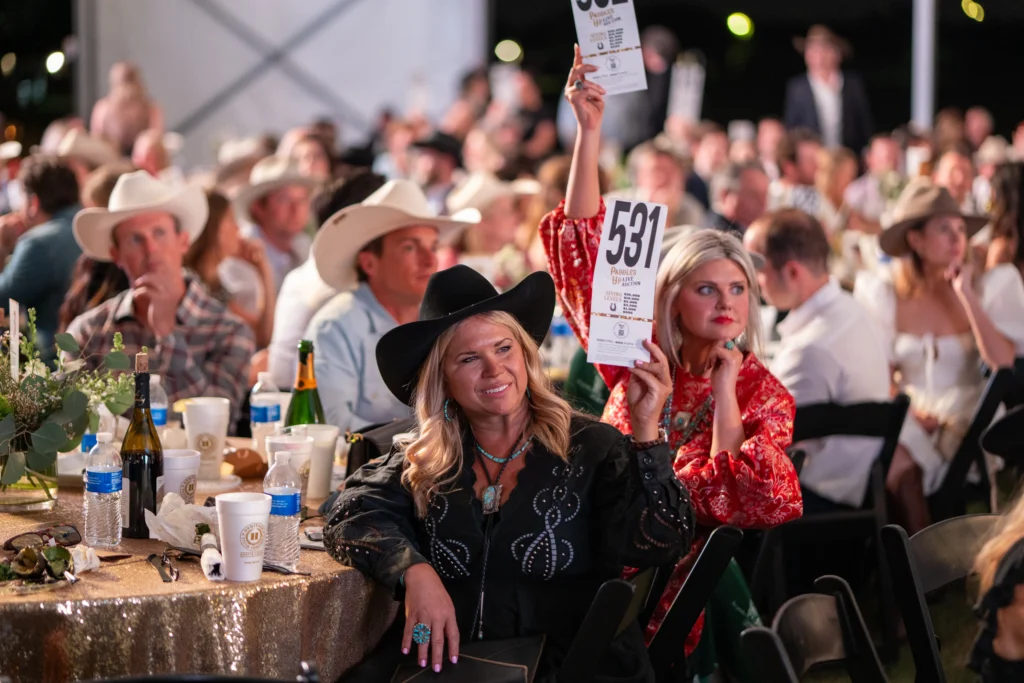
Picture a room of two hundred guests with eight carefully differentiated live items, each with three or four realistic bidders behind it. That’s eight separate opportunities for genuine competition, spread across a group of people who each have their own interests and their own reason to fight. Now spread that same two hundred guests across sixteen or eighteen lots instead, and you haven’t created more opportunity. You’ve asked a finite pool of serious bidders to stretch across twice as much inventory, and most of those lots will end up with one interested party instead of three or four.
It takes two bidders in a room to raise a price at all, and three or four serious ones to transform what an item closes at entirely, sometimes doubling or tripling what anyone in the room expected going in. Researchers who studied this exact dynamic across live and internet auctions, published in Organizational Behavior and Human Decision Processes, found that once a sale narrows down to a small handful of genuinely competing bidders, something closer to rivalry than reasoning takes over, and people pay well past what they’d have offered walking in cold. One of the auctions in that research, a well-known charity art sale, closed at roughly seven times the opening estimates once the room caught fire. A single bidder just closes the sale at whatever they were willing to pay from the start, and that’s revenue left on the table every time it happens.
This is also why differentiating your lots matters as much as choosing them well individually. Two similar experiences on the same catalog will cannibalize each other’s bidder pool no matter how good either one is on its own, and part of my job, well before the gala itself, is looking at a proposed list and asking which items are pulling from the same small group of interested guests, then helping a committee reshape the lineup before that becomes a problem on the night.
Pacing and Energy in the Room
A long auction also loses energy on its own terms, independent of what’s being sold. Attention is not infinite, even in a generous room full of people who came to give. Somewhere around item eleven or twelve, guests start checking their programs to see how much is left, side conversations creep back in, and the auctioneer is working harder for less.
A shorter list with genuine bidding wars on every single lot will outraise a much longer catalog nearly every time, because scarcity is what creates competition in the first place. Fewer lots means each one carries more weight, and a room that knows there are only a handful of chances left tends to fight harder for each one.
Quality Matters More Than Quantity in a Live Auction
Not every generous donation belongs on the live auction stage, and that’s not a knock on the donation. A live-auction-worthy item needs to be desirable to several people in that specific room, priced at a level that matches what that donor base can comfortably spend, and exciting the moment it’s announced. It should offer an experience, access, or opportunity people genuinely want, not just something that reads well on paper. Above all, it needs enough potential bidders behind it to create competition once the gavel goes up.
“Expensive” and “good live auction item” are not the same thing, and mixing them up is one of the most common mistakes I see on a first-draft catalog. A ten-thousand-dollar package that only one guest in the room actually wants is a weaker live auction lot than a three-thousand-dollar experience that six different people are quietly hoping to win. The first one closes at its opening bid with a polite smattering of applause. The second one turns into the kind of back-and-forth that gets the whole room leaning in, and often closes well above where anyone expected. Value on paper and value in the room are two different measurements, and the live auction only cares about the second one.
Know Your Audience Before Choosing Your Auction Items
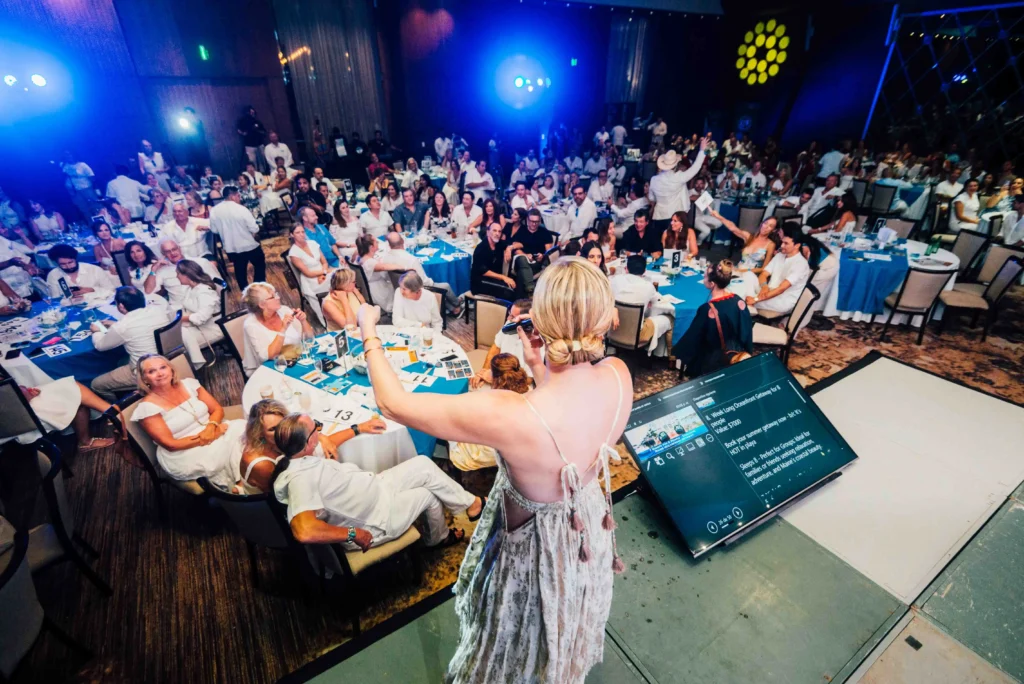
There’s no such thing as a universally perfect auction catalog, and I’d be doing a client a disservice if I ever tried to hand them a generic “best live auction items” list and called it strategy. The right five to nine items for a black-tie gala in a downtown ballroom look nothing like the right five to nine for an intimate donor dinner, even if both organizations are raising money for similarly worthy causes.
Before I help a committee build a catalog, I want to see past bidding data if it exists. What sold well last year, and what quietly under-performed despite looking strong on paper. I want to understand the guest demographics and interests in the room, not just their giving capacity but what this specific group of people has responded to before. Repeat bidders and major donors matter here too. If I know three of your biggest supporters have a soft spot for travel experiences, that changes what I’d want to see on the list far more than any generic ranking of popular auction items ever could.
What I’m really asking a committee to weigh is whether this specific room, with these specific guests, would fight over this particular item. Impressive on paper only matters if it’s impressive to the people actually sitting in the seats that night, and the gap between those two things is exactly where a lot of live auctions lose money without ever realizing why.
How Long Should a Live Auction Last?
Item count and auction length are directly connected, but I’d steer any committee away from a rigid promise like “ninety seconds per item” or “twenty minutes total.” Bidding doesn’t move at a fixed pace. Some lots build slowly and then explode into a real fight in the final seconds. Others move fast and close clean. An experienced auctioneer is reading the room in real time, knowing when to push a lot a little longer because the energy is still climbing, and when to close cleanly because it’s already peaked.
What matters far more than the stopwatch is that the auction moves with purpose from start to finish, and that the audience stays engaged even during the lots they’re not personally bidding on. A room that’s still leaning in unison at item nine is a room that’s about to give generously at the fund-a-need. A room that’s checked out by item six because the pacing dragged is a much harder room to bring back. The goal is always to finish while the energy is still climbing, not to squeeze in one more lot because it happened to be donated.
How Your Live Auction Should Work With the Raise the Paddle
The live auction and your Raise the Paddle (sometimes called Fund-a-Need) shouldn’t be planned as two unrelated agenda items that happen to sit near each other on the same program. They need to be considered together, because what happens during the auction directly shapes how the room responds to the ask that follows it.
A well-run live auction builds real rapport between the auctioneer and the room. Guests get comfortable responding, competing, and following instructions from the stage, and that comfort carries directly into the paddle raise. I’m establishing trust with a hundred or a thousand strangers over the course of five to nine lots, and by the time we get to the fund-a-need, that trust is doing real work. This is exactly why an exhausted room that just sat through fifteen or eighteen lots is such a costly mistake. You’ve spent the very energy you needed for the ask on items that should never have been up there competing for attention in the first place.
Sequencing between the two should be decided strategically for your specific event, including a strong ‘Mission Moment‘. I’ve written in more detail about how to plan a charity gala auction that raises more money, including exactly how I sequence and pace live items so the room arrives at the fund-a-need still warm rather than worn out.
What Should You Do With Good Items That Don’t Make the Live Auction?
Committees almost always come to this conversation with more good donations than five to nine slots can hold, and having fewer live lots simply redirects the rest to a place where they’ll perform better, rather than leaving them behind.
A silent auction can carry far more variety and lets far more guests participate at once, which makes it the right place for solid items that simply don’t have enough bidder depth to justify a live slot. But silent isn’t the only other home for a good item.
A raffle can turn a strong donation into a low-friction, high-volume revenue line of its own. A golden ticket, an instant-win add-on sold alongside regular admission, does the same thing with a bit more excitement built in. A simple on-stage game like heads or tails can put a smaller item to great use while giving the room another moment of fun between bigger auction beats. And a lucky-paddle drawing, a random draw for a bonus prize among everyone who bid or bought in that night, is a great way to give a good item a spotlight of its own, provided the prize behind it is genuinely fabulous.
Sometimes two or three complementary donations, a spa package here, a dinner certificate there, are stronger combined into a single compelling live lot than they’d ever be sold separately. And every so often, the right answer is simply saving a strong item for next year, when the room or the moment fits it better.
The live and silent auctions are doing different jobs, and it’s worth remembering that any time a committee starts feeling guilty about “cutting” a donation from the live stage. The silent auction is built for breadth and participation. The live auction is built to be the curated centerpiece, designed entirely around energy, urgency, and competition, and it stays that way by staying selective.
How to Narrow Down Your Live Auction Item List
When a committee hands me a longer list than the room can support, here’s what I’m asking about each item to decide what stays:
Will several people in this specific audience genuinely want it? Is the value appropriate for what this room can comfortably spend? Does it duplicate something else already on the list? Could better packaging make it more compelling than it currently is on its own? Does it bring something different to the lineup rather than more of the same? Where would it sit in the running order? And honestly, would it perform better in the silent auction instead?
Running every proposed item through those questions almost always gets a bloated list down to something tight and strong, and it does it without anyone having to feel bad about a donation that simply wasn’t right for the stage.
The Order of Your Live Auction Items Matters Too
Choosing the right five to nine items is only half the strategy. Deciding when to sell each one matters just as much, and it’s an area where a lot of committees default to ordering by dollar value alone, which is rarely the right call.
Sequencing affects momentum in ways that aren’t always obvious from a spreadsheet. I think carefully about bidder crossover between items, so I’m not putting two lots that are chasing the same small group of guests back to back. I avoid clustering similar experiences together for the same reason. I think about where the broadest-appeal item belongs in the lineup, because sometimes that’s the opener that gets everyone warmed up and sometimes it’s the closer that sends the room out on a high note. Done well, the running order builds genuine peaks in excitement across the auction rather than one big moment surrounded by flatter ones, and it protects the energy the room still needs for the fund-a-need right behind it. This is exactly the kind of decision an experienced benefit auctioneer should be involved in well before the night itself, not improvising from the stage.
When Should You Have More, or Fewer, Live Auction Items?
You may need fewer items if:
Your program is already running long before the live auction even opens. Your fund-a-need is the primary fundraising priority for the night and needs the room’s energy protected for it. Only a handful of your donated items have real bidder depth behind them. Guests have already been asked to participate heavily earlier in the evening through games, raffles, or other activations. Or several of your strongest proposed lots would realistically appeal to the same small group of donors.
You may be able to support more items if:
You’re working with a large, highly engaged audience with a track record of strong bidding. Your historical data backs that up with real numbers, not just a good feeling about last year. The lots you’re considering have clearly different buyer profiles rather than overlapping appeal. Live auction revenue is a central part of your fundraising strategy for the event. And your auctioneer, having looked at the room and the timeline, believes it can genuinely support the extra lot.
The distinction that matters most here is that more items are earned by the strength of the room and the inventory, never by how many donations a committee happened to secure. A packed catalog built because procurement had a good year is not the same thing as a room that can support it.
Work With Your Charity Auctioneer Before You Finalize the Auction
Don’t wait until the week of the gala to bring your auctioneer into this conversation. My role goes well beyond standing on stage and calling bids on whatever list gets handed to me. I want to review potential items while there’s still time to act on what I see, help identify which ones have real bidder appeal in your specific room, work through packaging and narrowing decisions with your committee, advise on running order, and help coordinate the live auction with your fund-a-need so the two are working together instead of competing for the same energy.
If you’re planning a charity auction and trying to figure out where to start, reach out and let’s build a live auction strategy designed around your guests, your mission, and your fundraising goals, not an arbitrary number of items on a list.
Where auction performance meets purpose
Let’s Build a Catalog Every Lot Can Win
Biddy Up helps committees size, price, and sequence a live auction that fits their room, so every lot goes into a real fight instead of a polite pause.
Start the Conversation Explore Services