

Most of the charity auction mistakes I see have nothing to do with what happens on auction night. By the time I’m in the room, the outcome is already shaped by the decisions that were made by the gala committee weeks or months earlier: when sourcing started, who owned follow-through, what got promoted, and when. And most of them aren’t a money or cost fix, they’re simply things that require a little more time and a careful game-plan.
I’ve worked with well over a hundred nonprofits since 2017, and the same handful of planning mistakes show up again and again, usually well before anyone’s thinking about run of show or bid increments. Here are the 10 mistakes I see most often, and what to do differently to ensure auction night success.
1. Starting Item Sourcing Too Late
Procurement is almost always the piece that gets pushed back. Committees lock the venue and finalize the guest list months out, then wait until six to eight weeks before the event to start asking board members for donated items.
By then, the strongest possible items are already off the table: the fabulous trip that a board member’s connection might have donated, the once-in-a-lifetime experience that takes real lead time to arrange. Start sourcing at the same time you lock in your gala date and venue, not after.
2. Recycling the Same Items Year After Year
Donors remember what they’ve already seen. A spa package that shows up in your catalogue three years running stops generating real competition, because your most reliable bidders have already decided what it’s worth to them. Or are bored of the same things.
Fresh, specific items create fresh interest. If an item performed well last year, ask what made it work rather than simply asking the same donor to give it again.
3. No Single Person Owns Procurement Follow-Through
Item sourcing tends to get spread across a committee with good intentions and no single point of accountability. Everyone assumes someone else is following up with the donor who verbally committed to a package in March, and by August, half of those verbal commitments have quietly evaporated.
One person needs to own the procurement list end to end, tracking what’s confirmed against what’s still pending a second ask.
4. Skipping Proper Fair Market Value Documentation
Every donated item needs a fair market value on record, even the ones where you’d rather not print that number publicly on a bid card or slide. This isn’t optional. Your organization needs it for gift acknowledgment letters and tax substantiation, and your winning bidders need it to know what portion of their payment is tax deductible.
Committees that skip this step during intake end up scrambling to reconstruct values after the event, when the donor relationship that could confirm a number has gone cold.
5. Writing Vague Item Descriptions
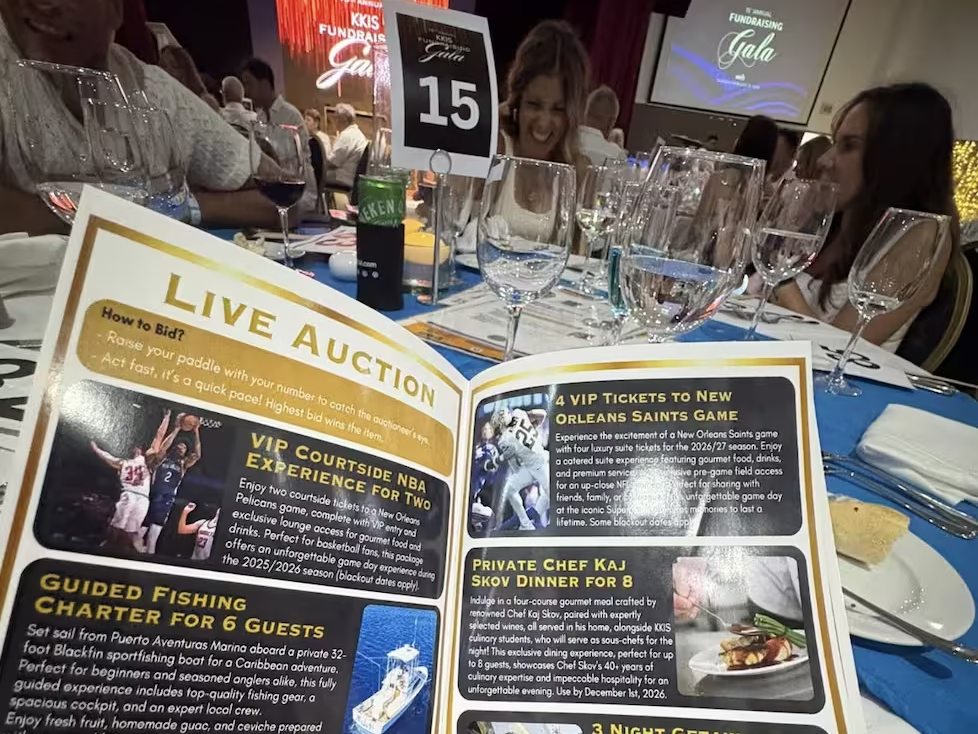
A vague item description can undersell even a fantastic auction prize. Simply stating that an item is “dinner for four,” “a weekend stay,” or “an autographed jersey” explains what it is, but it does not give guests much reason to bid. Strong auction copy helps bidders picture themselves enjoying the experience and understand what makes it special.
If there are blackout dates, booking restrictions, expiration dates, additional taxes or gratuities, they should be easy to find before bidding begins. The same applies to anything that could materially affect the value or usability of the item. Nobody wants to win what sounded like an incredible getaway only to discover afterward that their preferred dates aren’t available or that significant costs weren’t included. This will only leave a sour taste in your donors mouths and could cost you on bids in your future auctions.
6. Promoting the Auction Too Late, or Only Once
An email blast two weeks out is not a promotion strategy. Guests who don’t know what’s coming, and who haven’t heard about specific items more than once, walk in with less intention to bid than guests who’ve been anticipating a particular item for a month.
Start previewing standout items as soon as they’re confirmed, across whatever channels your organization actually uses, and repeat it more than you think you need to. Not everyone is online on your social media channels or is reading your emails in word-for-word detail!
7. No Plan for Checkout and Payment Collection
The night is going well, guests are generous, and then checkout turns into a bottleneck of confused volunteers and a line of people trying to leave. A checkout process that hasn’t been staffed and tested in advance turns a strong fundraising night into a frustrating last impression, right when guests should be leaving feeling good about what they just gave.
Assign this duty early, and give the team that you assign to run it a real dry run, not just a verbal explanation the week of the event.
8. No Plan for Unsold Items or No-Show Winners
Something will go unsold, and someone who won an item will occasionally not show up to pay or collect it. Committees that haven’t thought through what happens next lose momentum on items that could still be sold in a follow-up push, and let payment collection on unclaimed wins drag out for weeks.
Decide in advance how unsold items get handled, whether that’s a post-event online sale or folding them into next year’s catalogue, and who’s responsible for closing out unpaid wins.
9. Sending Volunteers Into the Night Without a Real Briefing
Runners, checkout staff, and table volunteers are often recruited the week of the event and briefed for five minutes right before doors open. They end up unsure how to log a winning bid or where unsold items should go, and unable to answer a guest’s basic question about how checkout works.
A short, real training session, even twenty minutes, the day before or morning of, pays for itself many times over in how smoothly the actual night runs.
10. Not Using a Real Auctioneer
And as a professional auctioneer, of course this is the most vital in my eyes.
A board member or beloved staff volunteer running the microphone feels like the free option, but it rarely is. A trained auctioneer reads the room in real time, pushing when the energy is building and easing off when it isn’t, and knowing when to hold a bidding war a beat longer instead of closing it early.
A volunteer with good intentions and a microphone can call out numbers, but replicating that judgment is a different skill entirely, and the gap between the two usually shows up as real dollars left on the table by the time the gavel comes down. If a committee is looking to cut costs somewhere, the auctioneer’s fee is rarely the place to start, given how directly that role connects to what the room actually raises.

Most of These Are Fixable With Time, Not Budget
None of these mistakes require a bigger budget or a wealthier donor base to fix. They require deciding earlier who owns what, and building in the lead time that good procurement and promotion actually need. If you’re planning your next event and want a second set of eyes on where your own process might be losing ground, that’s exactly the kind of planning I like working through with a committee well before the invitations go out.
Where auction performance meets purpose
Avoid the Mistakes That Cost Your Auction Real Money
Biddy Up works with nonprofit committees months before event night to close the planning gaps that quietly shrink auction results.
Start the Conversation Explore Services