

At a gala last spring, I watched a couple stop in front of an auction table, read the card taped next to a week at a lake house, and keep walking. The card said “7 nights at a private lake house, sleeps 8.” True, but nothing about it made anyone picture standing on that dock at 6 a.m. with coffee, or the particular quiet of a lake before the rest of the house wakes up. Twenty minutes later, one of our volunteers had rewritten the card by hand: the smell of pine through the screen door, the boat that comes with it, the fact that only one week like this gets donated every year. Bidding on that item closed forty percent above where it opened.
That gap, between what an item is and what a description makes someone feel about it, is where strong auction item descriptions earn their keep, and it happens well before anyone reaches the microphone or steps into the room the night of the event.
Most Auction Item Descriptions Read Like Inventory, Not Invitations
The instinct on a planning committee is to describe an item the way you’d describe it to a spreadsheet: dinner for four, two nights with an ocean view, an autographed jersey still in its display case. Every fact checks out, and still nobody bids, because a fact by itself isn’t a reason to raise a card.
Strong charity auction descriptions do the same job I do from the stage. They put the bidder inside the experience before a dollar is on the table, so raising a hand feels like saying yes to something already wanted instead of evaluating a line item on a sheet.
Start With the Experience, Not the Object
The lake house card worked because the rewrite led with a morning, not a floor plan. When I write or coach a committee through auction item marketing, I ask them to picture the exact hour someone would enjoy that item most, and describe that hour.
A round of golf becomes the first tee shot at a course members wait years to play. A private chef dinner becomes the moment the chef plates the first course tableside while explaining where the fish came from that morning.
The object is still in there, the square footage, the number of nights, the name of the course, but it shows up in service of a scene instead of standing in for one.
Write the Headline Before You Write Anything Else
Long before a bidder reads a single sentence about what’s included, they read four or five words on a card, a program line, or a screen.
If those words say Bourbon Basket, most people keep walking, even if that basket holds three rare pours from distilleries most guests couldn’t get their hands on any other way. I watched exactly that happen at an event two years ago, until we retitled it An Evening of Rare Pours: A Distiller’s Table for Four, and the same basket that had been sitting untouched for an hour picked up three bids in the next twenty minutes. The whiskey never changed. Only the few words above it did.
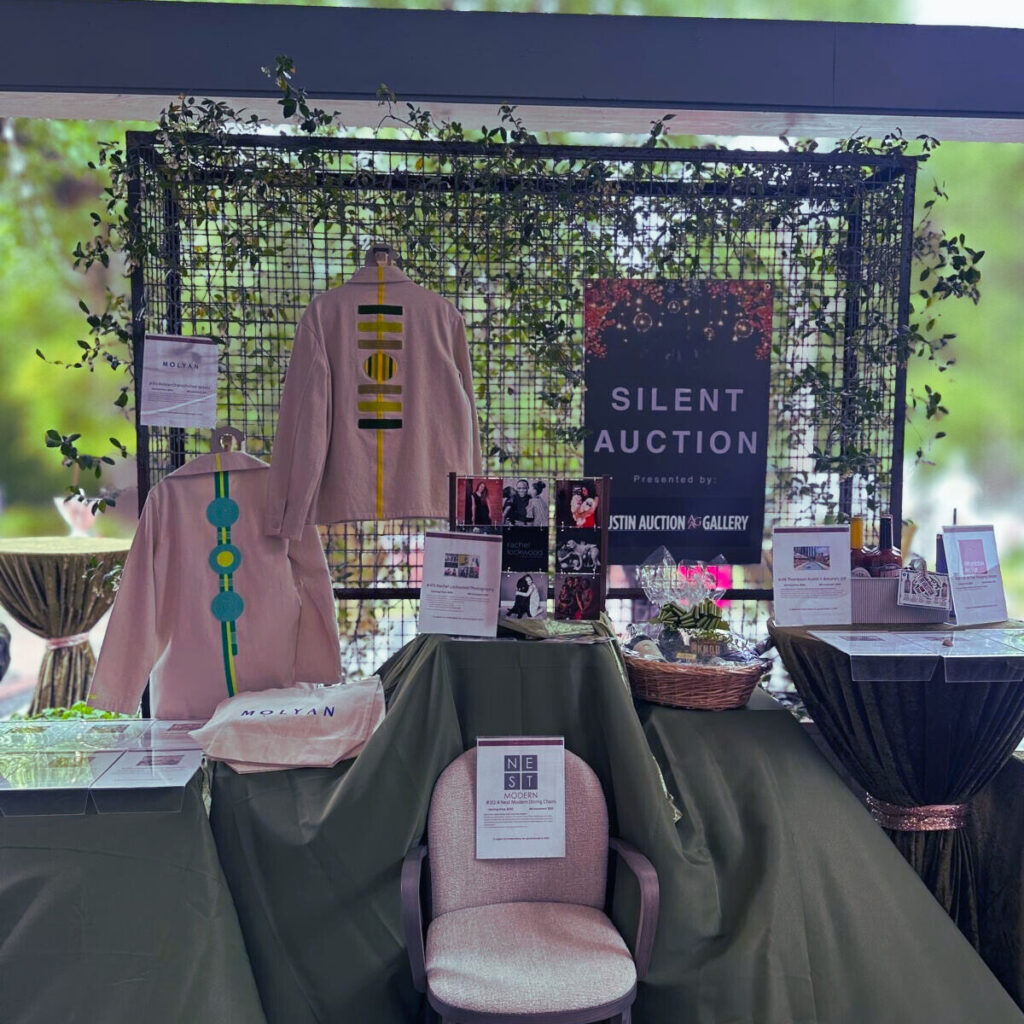
A title has one job, which is convincing someone standing three feet away that the paragraph underneath is worth reading. It doesn’t need to be clever for its own sake, and it shouldn’t promise more than the item delivers, but it does need to name the experience rather than the object. I ask committees to picture the exact words their best friend would use describing this item over coffee the next morning, then build the title from that sentence instead of from the donation form.
Specific Numbers Build Trust Faster Than Adjectives
“Amazing” and “one-of-a-kind” show up on more auction item cards than almost any other words, and they’ve stopped meaning anything to a bidder who has already read forty of them that night. What still lands is a number nobody could invent on the spot, like a vineyard that only releases two hundred bottles of a vintage each year, or a seat location that has sold on the secondary market for triple its face value.
Specificity does the work adjectives are trying and failing to do, telling a guest that a claim is real enough that someone actually bothered to check it.
Say What’s Included, and Say What Isn’t
A description’s second job, right behind making someone want the item, is answering every question they’d otherwise have to track down a volunteer to ask. What exactly comes with a weekend getaway. Whether a certificate covers tax and gratuity or just the meal. Whether the trip has blackout dates, an expiration date, or has to be booked by a certain month.
I learned this one the hard way early in my career, when a donated ski trip didn’t mention it excluded the week of Christmas, which happened to be the only week the winning bidder could travel. She was gracious about it, but I never again let a restriction go unmentioned on a card, because the goodwill an unclear description costs you afterward is worse than any bid it might have won you that night.
None of this needs to read like fine print. State it plainly, in the same warm tone as the rest of the description, and bidders read it as honesty instead of a warning label. What kills trust isn’t a restriction. It’s discovering one after you’ve already won.
Thank the Donor
You should always credit whoever donated the item, by name, not just as an afterthought at the bottom of a sheet (unless they ask to remain anonymous). It’s a courtesy to the donor, and it does real work for you too. A guest who recognizes a local restaurant or a business owner in the room bids with more confidence than one looking at an anonymous gift card, because the item now has a face and a relationship attached to it.
Give the Bidder a Reason to Act Tonight
A description also has to answer a question the reader is asking without saying it out loud, which is why bid now instead of thinking it over. Scarcity answers that question honestly when it’s true: a trip donated for this event only, a chef who only takes two private bookings like this a year, a seat that won’t be offered again once this donor’s season tickets change hands.
I would rather undersell an item’s exclusivity and have it hold up than oversell it and have a bidder discover later that the same experience is available any weekend for the asking. The trust an item description spends, it spends for the whole evening, not just for that one lot.
Let the Photo Carry What the Words Can’t
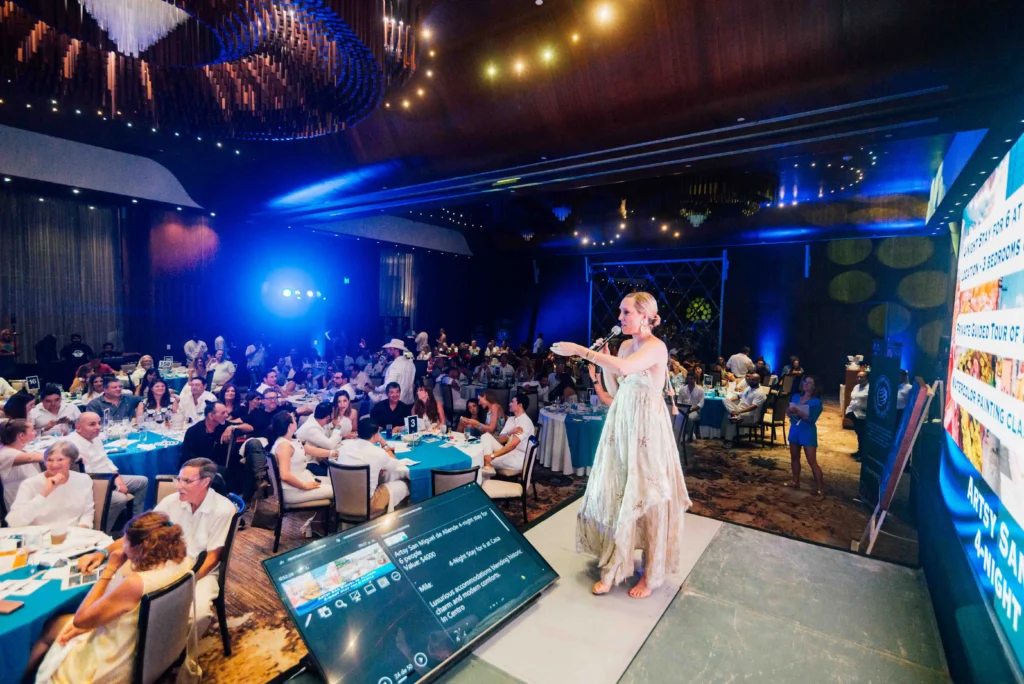
Words get an item most of the way there, but I’ve never seen a paragraph do what one good photo does in half a second. A stock image of a beach doesn’t move a room. A picture of the actual villa’s private plunge pool, or the actual chef’s tasting menu plated the way it will be plated for the winner, does.
At one gala, we swapped a generic vineyard photo on a live auction slide for a shot the donor sent us of that exact vineyard’s sunset over the actual rows we were selling, taken the week before the event. The energy in the room shifted before I said a word, and that lot closed well above where the identical package had closed the year before with a stock photo behind it.
For anything intangible, an experience, a service, a night out, ask the donor directly for real photos before settling for a library image. If a physical item has to stay behind glass or locked up for insurance reasons, a close, well-lit photo does more work than a guest squinting at it from across the room. On stage, I want a photo big enough and clear enough that a bidder in the back row understands exactly what’s being offered without needing the card in their hand.
Live and Silent Descriptions Are Not the Same Piece of Writing
The words on a silent auction bid sheet and the words I say from the stage during a live auction are doing different jobs, even when they describe the same donation. Silent auction item descriptions have to work without a voice behind them. A guest reads the card once, maybe twice, while balancing a drink and half-listening to a conversation, so the strongest sentence needs to come first instead of building to a reveal three paragraphs in. Auction listing writing for a printed program or an online catalog follows that same rule, front-loading the most vivid, most specific detail, because most readers never make it past the first two lines.
Length has to flex with the format too. A display card next to the item on the table earns maybe three to five sentences, since a guest is reading it standing up, often with a drink in one hand. A bid sheet needs even less, room for the item’s name, its value, and its restrictions, with the story trimmed down to a single line, because most of that sheet’s real estate has to go to the bidding rows themselves. An online catalog listing or a program page can run longer, since a reader there has already chosen to slow down and look closer. I write the display card version first, since it has the least room for error, then expand from it for the program and trim further for the bid sheet, rather than writing one version and forcing it into every format after the fact.
From the stage, I have a guest’s attention for as long as I choose to hold it, so a live description can build the way the printed one can’t. I open with the same anchor detail from the program, then add texture in real time, playing off the room as bidding climbs. That’s part of why the card and my stage narration are never identical. The card has to earn a second look on its own, and what I say once bidding is underway earns the next raised bid.
The Mistakes I See Most Often
Too many committees treat fundraising item descriptions as an afterthought, something scribbled together the week before the gala instead of drafted with real intention. They describe what a donor gave instead of what a bidder gets, listing the retailer and dollar value on a gift card instead of the night out it actually buys. They write one description and paste it everywhere the item appears, the silent sheet, the program, the event website, when each of those readers is in a different mindset with a different amount of patience for the copy. And they save the best line for last, burying the one detail that would have made someone stop walking in the middle of a paragraph nobody finishes.
Just as often, I see a lineup where half the items list a value and credit a donor and half don’t, where restrictions show up on some cards and get discovered the hard way on others, and where two or three items have a real photo while the rest lean on whatever stock image was fastest to find. Guests notice that inconsistency even when they can’t name it, and it makes an otherwise generous lineup feel unfinished.
A Last Read-Through Before It Goes to Print
Before any bid sheet or program goes to the printer, I read every single description once more, out loud if I have the time, as though I’ve never seen the item before. I’m checking whether a stranger would understand exactly what they’re bidding on, whether the restrictions are stated plainly instead of buried, whether the photo actually matches the words next to it, and whether the value and the donor’s name both made it onto the page. That last pass catches more embarrassing gaps than any other step in the process, and it takes maybe twenty minutes for a lineup of thirty items. Skipping it is how a lineup ends up with one gorgeous description next to four flat ones.
A Few Questions I Get Asked Often
How long should an auction item description actually be?
It depends on where it’s printed. Three to five sentences for a display card next to the item, a single trimmed line for a bid sheet, and a slightly longer version for a program or online catalog, since a reader there has already chosen to slow down.
Who should be writing these, the committee or the auctioneer?
Both, ideally. A committee member usually knows the donor and the item’s real story. I help translate that story into language built to move a bidder, and flag anywhere a claim needs tightening before it goes to print.
Can I use the same description on my bid sheet, program, and social media?
The information can stay the same, but the format shouldn’t. I write the fullest version first, then trim it down for whichever format has less room, rather than copying and pasting one paragraph everywhere and hoping it fits.
Should every item description mention the nonprofit’s mission?
Not every single one, but the strongest items in a lineup usually connect back to it somewhere, even in a single line. A bidder who already feels invested in your mission that night needs less convincing on the item itself.
Let Biddy Up Help You Have Your Best Auction Yet!
Every item on your gala lineup already has a real story behind it, a donor who chose to give it, a place or an experience that means something to somebody. My job, and the job of whoever ends up writing those cards, is getting that story to the bidder before the gavel does. If you’re putting together descriptions for your next auction and want a second set of eyes on the copy, or want me in the room helping build the lineup from the start, let’s talk it through.
Where auction performance meets purpose
Every great auction starts with a story worth bidding on.
Biddy Up helps nonprofits source, position, and present auction items that capture attention, inspire competition, and maximize fundraising results—long before the bidding begins.
Start the Conversation Explore Services