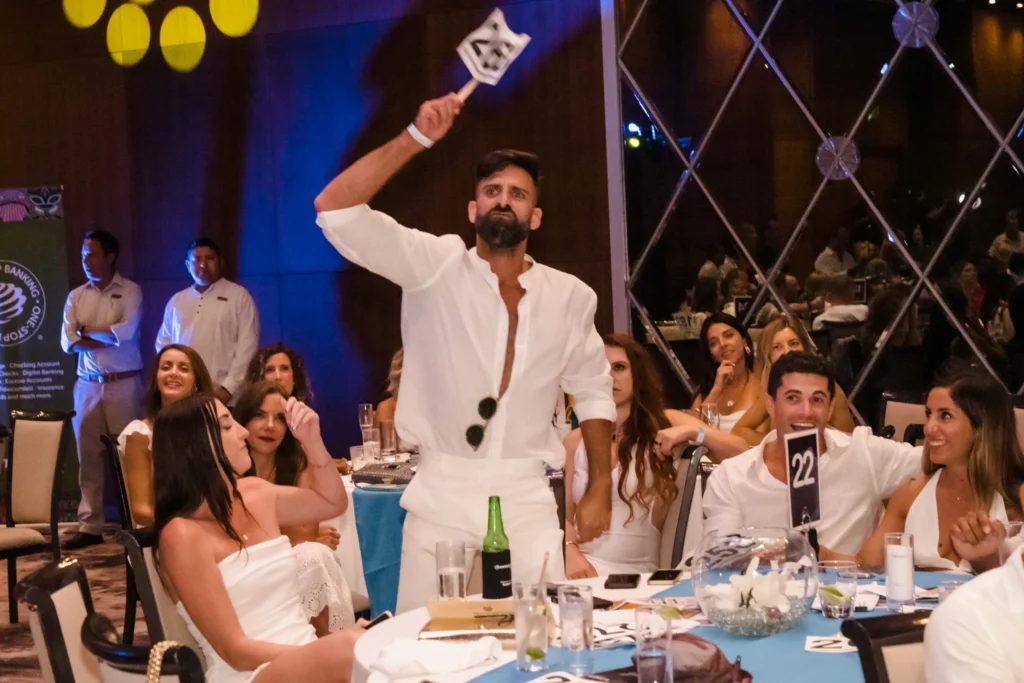
Some of the most rewarding case studies I get to share aren’t about a nonprofit outgrowing a small venue. They’re about a nonprofit that already had a great event, a full room, generous donors, real momentum, and found there was still another level to reach once the right person was running the auction.
That’s exactly the story behind KKIS, and it’s one of my favorite case studies to walk through, because the turning point had nothing to do with a bigger venue or a bigger guest list. It came down to a change in strategy.
Fifteen Years, Fifteen Auctions, One Big Turning Point
KKIS, Keeping Kids in School, is based in Playa del Carmen, Mexico, and has been running for over fifteen years. Their auction has run every single one of those years, growing a little more each time. It started small, back in year one, in a local bar with a handful of donated restaurant vouchers and whatever else the community could pull together, including, memorably, an old water heater someone donated because they genuinely didn’t know what else to do with it.
That was a long time ago, though, and it’s important to give KKIS its due here. By the time I came into the picture, this was already a thirteen-gala-strong organization with a real track record. They’d long since outgrown the bar and built their event into a polished gala for roughly three hundred guests, full dinner included, in the same venue they still use today. They had a dedicated gala manager and a strong volunteer team running the night, the kind of operation a lot of nonprofits would be proud to call their own. What they didn’t have was someone trained specifically to run the auction itself. The role had always gone to a volunteer, often whoever on the committee was most comfortable holding a microphone, doing double duty as MC and auctioneer.
How We Started Working Together
I met the head of the KKIS board on a flight, of all places. Not at a networking event, not through a referral, just a friendly conversation between strangers in adjacent seats that turned into them asking what I did for a living, and me asking what they did.
By the time we landed, they were cautiously interested in using me for their gala, and I think more than a little skeptical. Hiring a professional auctioneer wasn’t something they’d ever budgeted for, let alone trusted a stranger from a plane to deliver on.
That’s usually how the best partnerships start, with someone willing to take a chance on a number they haven’t seen proven yet.
What Changed in the First Year
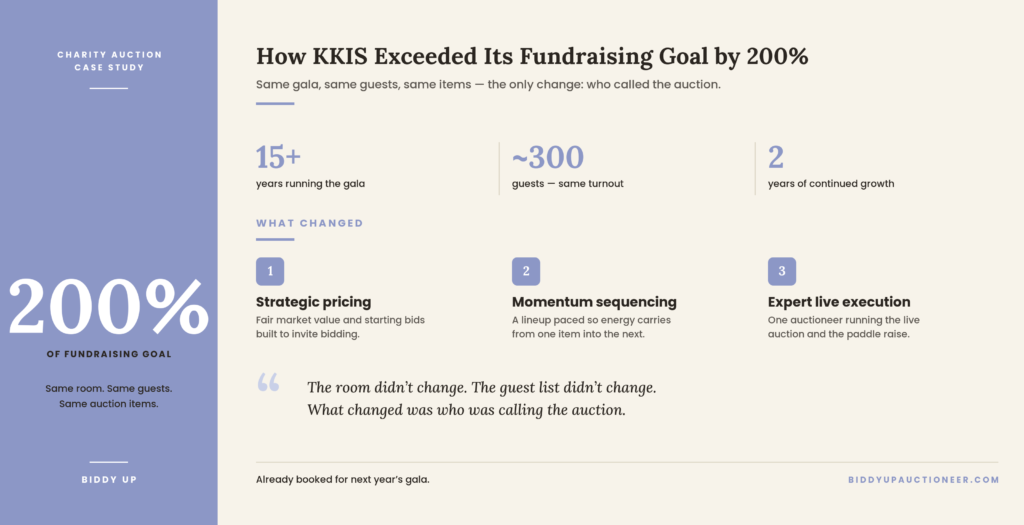
Here’s what I want to be clear about. The room didn’t change. The venue didn’t change. The roughly three hundred guests didn’t change, and neither did the quality of what was on the auction block. KKIS had already built something good, with great items and a generous, engaged crowd. What had been missing was someone on stage trained specifically to run that part of the night, someone who could price items strategically, sequence the lineup for momentum, and read three hundred bidders in real time instead of working from a script.
In our first year working together, with that exact same room and that exact same guest list, KKIS’s gala and auction brought in 200 percent of the revenue goal they’d set going in. I want to be careful here, because the exact figures belong to KKIS and I’m not going to put a dollar amount on someone else’s books. But that 200 percent number is real, and it came from the same donors and largely the same items they’d auctioned the year before. The only real variable that changed was who was calling the auction and how it was planned.
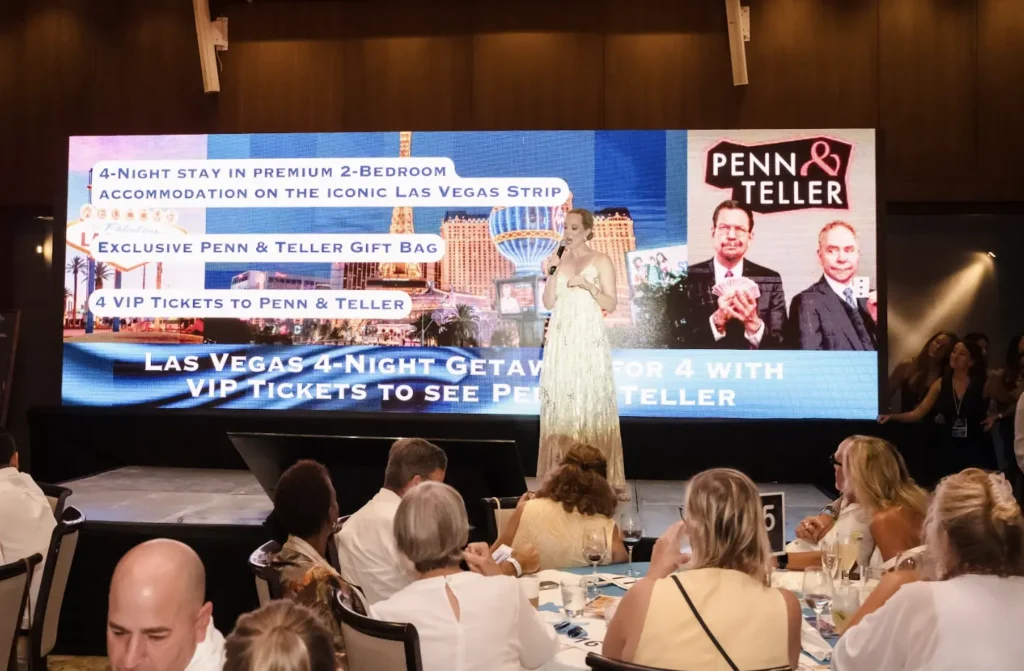
Pacing made the biggest difference. Where the lineup used to move at whatever speed felt natural to whoever was holding the microphone, I built the order so momentum carried from one item into the next, saving the items most likely to spark competitive bidding for the moments the room had the most energy to give. Pricing followed the same logic, getting every item a fair market value and a starting bid built to invite bidding instead of stall it.
It Wasn’t Just the Auction Items
The live auction gets most of the attention, but it wasn’t the only place revenue grew. The paddle raise, that stretch of the night where guests simply raise a paddle to pledge a gift instead of bidding on an item, brought in noticeably more than KKIS had seen from that part of the program before. I’ll keep the specific tactics close, that’s part of what I bring to a room, but a lot of it comes down to knowing the crowd. Who’s likely to give and at what level, how to read the energy in the room before asking for that pledge, and how to use a team, including the cowboy-spotters working the floor, to keep that momentum moving instead of letting it stall.
That’s really the bigger point behind this case study. What I bring to a gala isn’t limited to pricing items and calling bids. It’s strategy support across the whole night, the auction, the paddle raise, the pacing between them, all working together instead of running as separate pieces stitched onto a dinner.
More Than the Number
The revenue increase is the easiest thing to point to, but it isn’t the only thing that changed. Guests noticed the difference too. The night felt more professional, more produced, more like an event people wanted to dress up for and tell their friends about. That kind of shift matters for a nonprofit gala just as much as the dollar figure, because it shapes whether donors come back next year ready to bid again or just show up out of loyalty.
KKIS told me how much their guests loved having the Biddy Up team in the room, and they’re already excited to have us back next year. That’s the kind of feedback that tells me we got it right. We’re not an add-on to a dinner in a ballroom. We’re part of what turns the night into a show.
KKIS has used me as their auctioneer for the last two years, and the gala has grown both years in a row. They’ve already booked me for next year’s event, which is the kind of vote of confidence that means more to me than almost anything else in this line of work.
Plenty of nonprofits running a successful, well-attended gala assume the only way to raise more is a bigger room or a bigger guest list. KKIS is proof that isn’t always true. Sometimes the room is already right, and what’s missing is the person calling the auction. If that sounds like where your event is, I’d love to talk about what comes next.
Where auction performance meets purpose
Your next fundraising breakthrough may already be in the room.
Biddy Up helps nonprofits maximize the potential of their existing donor base through strategic auction planning, live fundraising expertise, and proven gala execution that drives measurable results.
Start the Conversation Explore Success Stories