
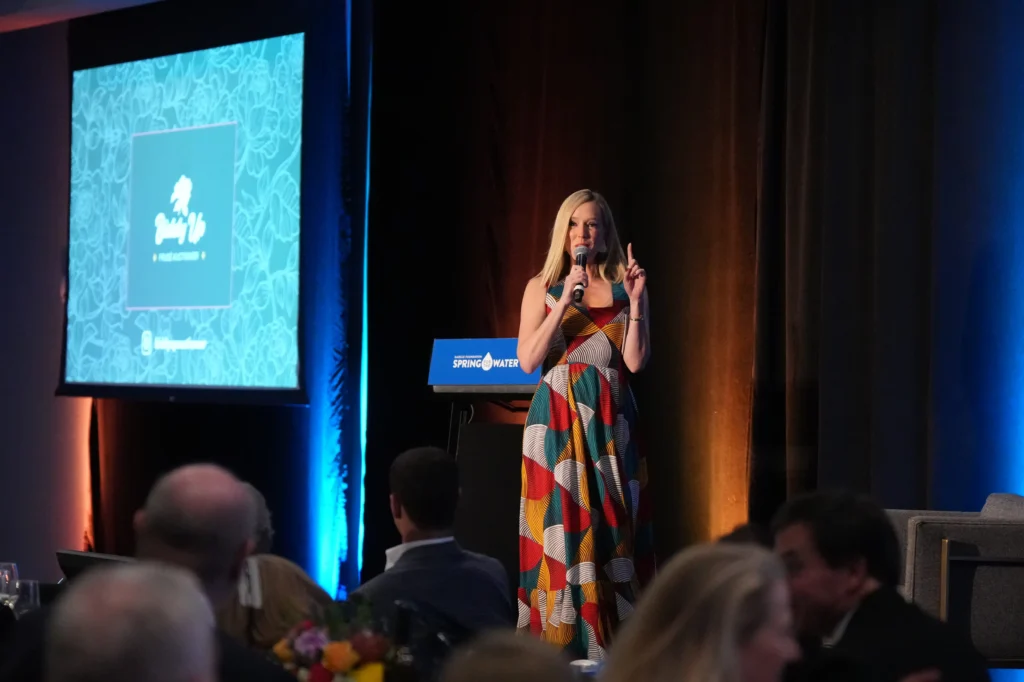
At most charity events, the live auction feels like the main moment. The room quiets, the energy shifts, and all attention moves to the stage. What many people don’t see is how much of that moment has already been planned for and set-up, so far in advance.
A live auction is not won in the room alone. It is built through careful planning, strategic choices, and real-time decision making that most guests will never notice. As a professional charity auctioneer, I step into that process long before the event begins, working with clients to shape an auction that does more than entertain. It performs.
When I’m brought in to support a gala, my role is more than just hosting a moment in the evening. My role is to influence the outcome of the entire auction and help non-profits raise even more money. That starts well before the event and continues long after the last paddle is raised.
Most People Think an Auctioneer Just “Runs the Bidding”
I understand why that perception exists. The live auction is the most visible part of the night. It is where the energy builds, where the bids climb, and where the room is fully engaged.
When an auction falls flat, it is rarely due to what happens on stage. In my experience, it usually comes down to structure, sequencing, or missed opportunities earlier in the process. That is where I spend a significant amount of time with my clients with my structured planning sessions.
What I Do Before the Event
This is where the real work begins, and it is where we see the biggest difference in results.
When I work with a client through Biddy Up, we start by reviewing the full auction package together. I am looking at every item not just in terms of value, but in terms of performance. Some items look strong on paper and struggle in a live room. Others create competition immediately.
We talk through item selection, and if needed, I help guide sourcing. That might involve suggesting experience-based packages, group bidding opportunities, or working with auction companies to strengthen what is already in place. I can help you decide what is best suited for your silent vs live auctions.
From there, we shape the structure. I work closely with the team to determine the right order for the items. That order matters more than most people expect. Opening too strong can flatten the rest of the auction. Opening too soft can make it difficult to build momentum.
We also refine descriptions. Clear, compelling language helps guests understand what they are bidding on without hesitation. Confusion slows bidding. Clarity encourages it.
I will also review pricing strategy, starting bids, and increments so that everything feels accessible while still protecting value.
Alongside this, we look at the run of show. Where the auction sits in the evening, how it transitions in and out of other segments, and how we keep the room engaged throughout. These are not small details. They directly affect how people participate.
This stage is collaborative. I am not stepping in at the last minute. I am working with the team to build something that is set up to perform.
What Happens During the Live Auction
Once the auction begins, everything becomes about reading the moment and making decisions in real time.
I am constantly adjusting pacing. The right rhythm keeps people engaged and confident. If things move too quickly, bidders hesitate. If things slow down too much, energy drops.
Bid increments are not fixed. I adjust them depending on the room, the item, and the bidders involved. A confident bidder can move quickly. A more hesitant bidder may need smaller steps to stay in.
The most important moments are often the quiet ones. A pause in bidding can signal the end, or it can be an opportunity. I am watching for those signals and deciding whether to hold the moment, reframe the value, or invite one more bid.
Transitions matter just as much. Each item needs to flow into the next without losing the room. When that flow is right, the auction feels continuous. When it is not, energy resets and we have to rebuild.
The Hidden Skill: Reading the Room
Reading the room is one of the most valuable parts of what I do, and it is often underestimated.
I am paying attention to who is engaged, who is holding back, and who has the capacity to go further. Some bidders respond to direct engagement. Others prefer to come in on their own terms. Recognizing that difference allows me to adjust my approach without disrupting the flow of the auction.
There are also moments where pushing harder is not the right move. Knowing when to pause, give space, and let a bidder step forward naturally can lead to stronger results than forcing the moment.
This is not something that can be improvised easily. It comes from experience, from being in hundreds of rooms, and from understanding how people behave in these environments.
How I Build Momentum Across the Auction
Momentum is something I am building from the first item to the last. It does not happen by accident, and it is never just about what is said on stage. Each result influences the next. When the room sees strong bidding early on, it creates confidence. Guests begin to understand that this is an active, competitive environment, and they are more likely to step in rather than sit back.
A big part of that momentum comes from the team around me.
At Biddy Up, I work with trained spotters, what we call our cowboy spotters. Their role is not passive. They are actively reading the room alongside me, identifying bidders, encouraging participation, and helping move bids forward at key moments. When you have the right team, it almost feels seamless. We are in sync, responding to the same signals, and supporting each other without needing to over-communicate.
They are not just there to point out bids. They know the items, they understand the flow of the auction, and they know when to gently encourage someone and when to push a little further. That awareness makes a real difference in how far a bid can go.
There is also an energy component to this. A strong team helps lift the room, keeps people engaged, and prevents those flat moments where attention starts to drift. That kind of support is far more effective than trying to carry everything from the stage alone.
Having spotters is valuable. Having the right spotters, who understand the strategy and work as part of a cohesive team, is what actually drives results.
Alongside this, I am still thinking about how items connect and how the auction flows from one moment to the next. When everything is working together, the room stays engaged, the bidding stays active, and the auction continues to build rather than stall.
What I Do After the Event
Once the auction is complete, I take time to review performance with the client. We look at which items exceeded expectations, which ones underperformed, and where there are opportunities to improve. This feedback is valuable for future events and helps build a stronger strategy over time.
The goal is not just to have one successful auction. It is to create a framework that can be refined and improved year after year.
Why A Professional Charity Auctioneer Is Often Underestimated
The role of a professional charity auctioneer is often seen as entertainment. That is only one part of it.
Or, it’s seen as just someone calling out numbers on a microphone. (…And, let me tell you – that fast-talking is a SKILL!)
What I do, and what we do at Biddy Up, is far more strategic. It involves planning, structuring, and guiding the entire auction process in a way that supports stronger results. When that is understood, the auction is no longer treated as a single segment of the event. It becomes a central part of the fundraising strategy.
Final Thought: It’s Not Hosting. It’s Driving the Outcome
I am not there just to host your auction. I am there to help shape how your audience engages, how your items perform, and how much you ultimately raise.
When you understand the full scope of this role, it changes how you plan your event. It allows you to build an auction that is designed to perform, not just to fill a space in the evening.
If you are planning a charity event, this is where the right structure and the right guidance can make a meaningful difference. That is the work we do at Biddy Up.
Where auction performance meets purpose
Your auction should do more than fill the program. It should drive the result.
Biddy Up works with nonprofits before, during, and after the event to shape stronger auction packages, guide the room, build momentum, and help every fundraising moment perform with purpose.
Start the Conversation Explore ServicesFAQs About What a Charity Auctioneer Does
What does a charity auctioneer actually do?
A charity auctioneer helps shape, structure, and lead the auction so it raises more money. This includes reviewing auction items, advising on item order, guiding bidding in real time, reading the room, and helping the event team build a stronger fundraising strategy.
Does a charity auctioneer help before the event?
Yes. A professional charity auctioneer should be involved before the event to review packages, refine item descriptions, suggest stronger auction items, advise on pricing, and help structure the live auction for better results.
How does an auctioneer increase bids during a live auction?
An auctioneer increases bids by controlling pacing, setting the right increments, reading bidder behavior, creating competition, and knowing when to push, pause, or reframe the value of an item.
Why do auction spotters matter?
Auction spotters help identify bidders, encourage participation, and keep energy moving across the room. At Biddy Up, our cowboy spotters work closely together to support the flow of the auction and help drive stronger results.
Is a charity auctioneer just an event host?
No. A charity auctioneer may host the live auction, but the role is much more strategic. The right auctioneer helps influence the structure, energy, bidding behavior, and final fundraising result.